38.10 screen output dictionary
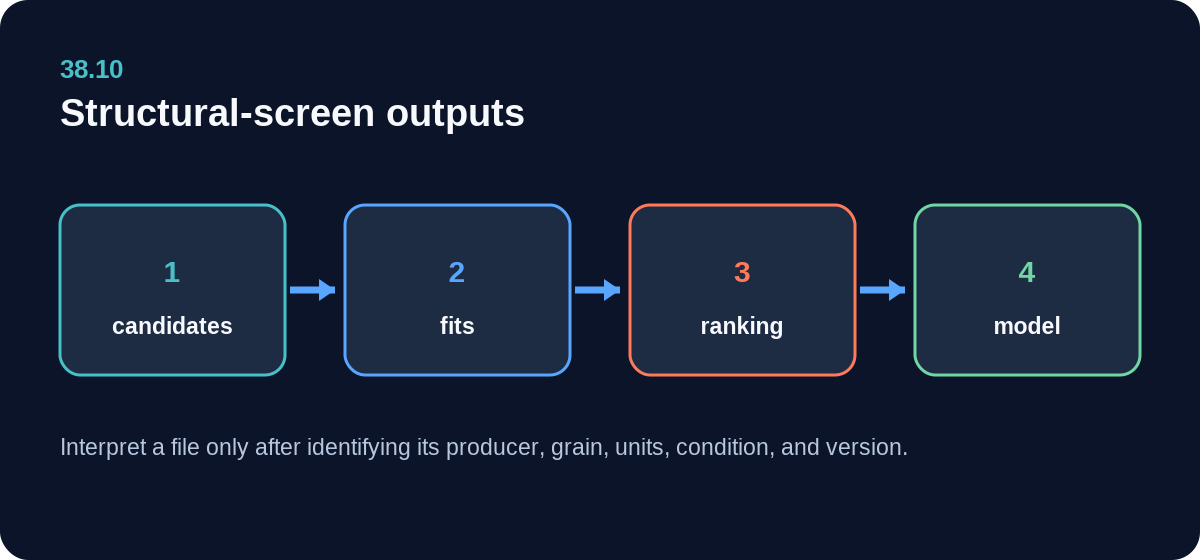
Screen writes both a high-level comparison and the complete nested fits. model_comparison.csv is the index; the candidate folder is the evidence. A failed candidate should remain visible, and best_model.ctl is a starting model for the next stage rather than a final scientific decision.
Files produced by screen
The table is a versioned contract for nlmx 4.16.2. “When present” is part of the schema: absence can mean disabled, not applicable, no qualifying rows, an earlier failure, or a defect. Distinguish those states with the summary/log and expected configuration.
| File or pattern | Format | When present | Row/object grain | Purpose | Key fields or structure | Units | Role |
|---|---|---|---|---|---|---|---|
model_comparison.csv |
CSV | always | one row per candidate model | fit status, likelihood criteria, diagnostics, eligibility, recommendation, and error | MODEL,DESCRIPTION,ADVAN,NCMT,ABSORPTION,LAG,STATUS,CONVERGED,OFV,N_PARAMETERS,N_OBS,N_SUBJECTS,N_PARAMETERS_RANDOM,AIC,BIC,DELTA,WEIGHT,COVARIANCE_STEP,CONDITION_NUMBER,CONDITION_NUMBER_ALL,MAX_RSE_PCT,MAX_RSE_PARAMETER,MAX_RSE_ERROR_PCT,MAX_ETA_SHRINKAGE_PCT,EPS_SHRINKAGE_PCT,FLAGS,ELIGIBLE,RECOMMENDED,SECONDS,ERROR | OFV; percent; seconds | primary |
lrt_tests.csv |
CSV | nested comparisons available | one row per nested model pair | likelihood-ratio comparison | REDUCED,FULL,DELTA_OFV,DF,P,SIGNIFICANT | OFV and dimensionless p | primary |
best_model.ctl |
NONMEM control stream | an eligible model is recommended | one final model | recommended structure with final estimates as starting values and prepared data path | NONMEM records | model-specific | primary |
screen_summary.txt / screen_summary.json |
text / JSON | always | one run summary | settings, candidates, estimates/RSE, starts, removed ETAs, tests, recommendation and reasoning | format-dependent | mixed | machine summary |
data/data_abs.csv, data_noabs.csv, data_transit.csv, id_map.csv |
CSV | needed by candidate set/data identity | record or ID mapping | prepared candidate datasets and nonnumeric-ID mapping | NONMEM input columns; ID,ORIGINAL_ID for map | dataset units | reproduction |
models/<candidate>.ctl |
NONMEM control stream | candidate generated | one file per candidate | candidate model definition and starting values | NONMEM records | model-specific | reproduction |
models/<candidate>/** |
fit result tree | candidate attempted | one nested fit | complete fit outputs for independent candidate review | same schema as fit | model-specific | primary |
report.html / plots/delta_<criterion>.* |
HTML / PNG / SVG | enabled | one report/criterion figure | recommendation, comparison table, tests, estimates, and delta chart | visual/table document | display units | presentation |
Reading sequence
- Confirm the command, nlmx version, exit status, output root and settings/CLI overrides.
- Open the text/JSON summary to understand status, warnings, counts and conditional branches.
- Validate the primary table headers and expected row grain before parsing values.
- Reconcile row counts and identifiers across related files.
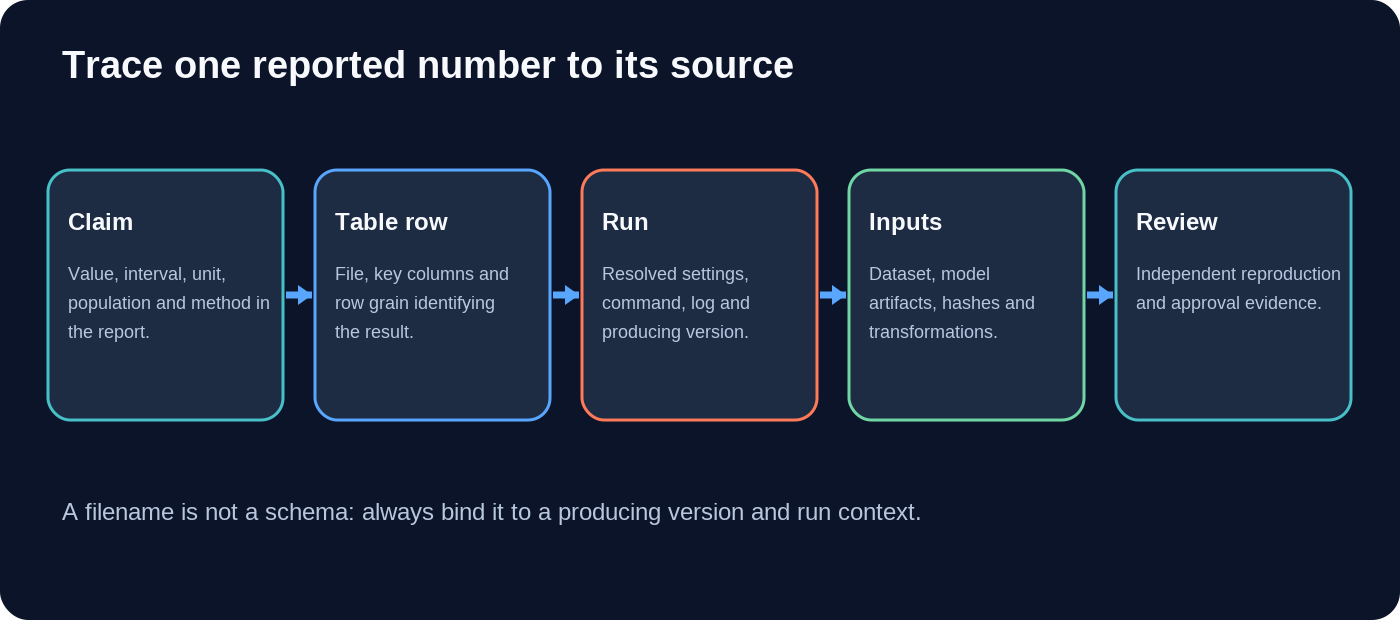
- Trace important estimates, classifications or decisions to the native model/data evidence.
- Inspect HTML and figures after verifying their source tables.
- Verify checksums and retain the complete tree, including failures relevant to denominators.
Common parsing mistakes
- treating an optional missing file as an empty successful result;
- grouping at subject level when the table is subject-by-occasion, replicate or simulation;
- using displayed text/plot rounding as the analytical value;
- joining dynamic files by row position;
- losing exclusions, failed fits or warnings while copying only the selected result;
- assuming units from a familiar column name rather than the run's data/model/settings;
- parsing a cache/checkpoint as if it were a stable final-results API.
Review questions
- Does every row have a clearly stated grain and candidate primary key?
- Are denominators and failure states retained?
- Are units and transformations traceable?
- Is the file a primary result, reproduction recipe, presentation, or operational state?
- Can a second analyst reproduce the reported value from retained inputs and settings?
Navigation
See the previous page, next page, and complete output reference.