Chapter 11. qc-data: quality control of a dataset
Before fitting a model, ask a simpler question: does every row mean what you think it means? nlmx qc-data examines a NONMEM-style dataset with 99 named checks covering the physical file, headers, values, event records, time, dosing, observations, individuals, covariates and NONMEM readiness.
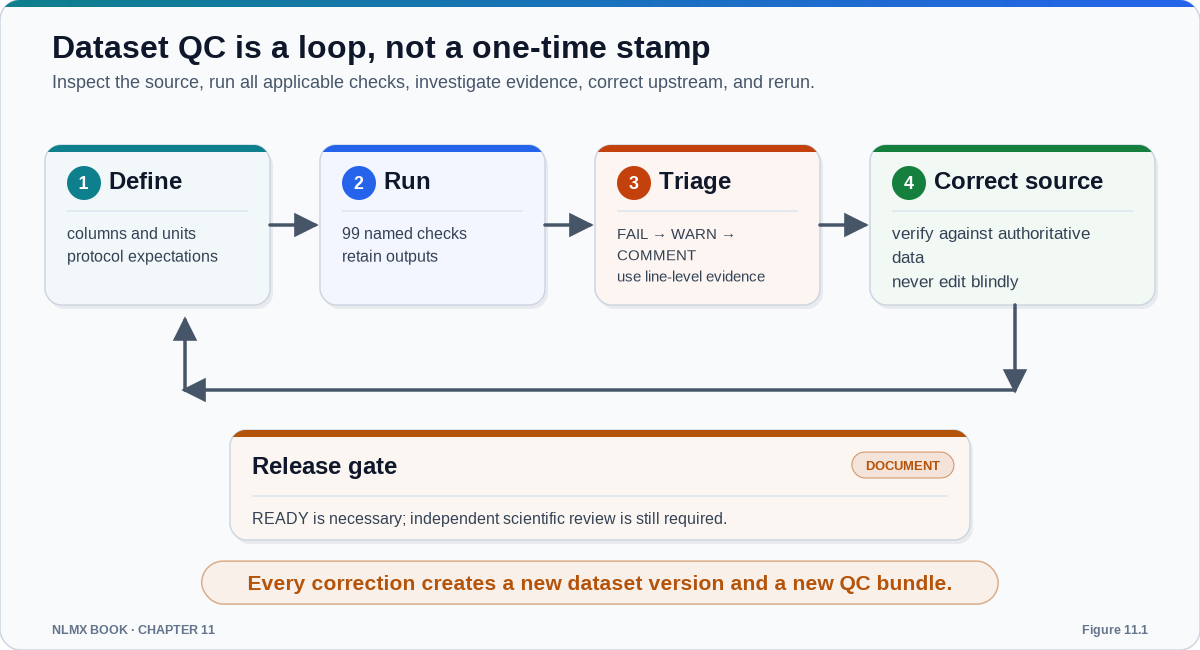
Figure 11.1. Quality control is an evidence-backed correction loop. A successful command or a READY verdict is not the end of scientific review.
Who this chapter is for
This chapter assumes no prior experience with command-line dataset QC. It explains what to type, what each output means, why pharmacometric data need event-aware checks, and how to investigate without editing data blindly. Chapter 6 remains the detailed reference for dataset semantics; links point back to it whenever a concept needs deeper treatment.
Scope and evidence
Behavior was checked against the qc-data command. Reproducible examples were executed with the locally available nlmx 4.3.0 release. That release exposes 99 checks in ten categories. Version differences must be reviewed with nlmx qc-data --list-checks rather than assumed away.
The example inputs are in documents/ch11/input, frozen outputs are in documents/ch11/results, and pytools/ch11_examples.py regenerates them. The clean fixture ended READY with no failures or warnings. The defective fixture ended NOT READY with four failed checks, thirteen warned checks and 29 finding rows.
Thirty-five Markdown pages
This chapter contains this overview, a complete command/option index, and 33 focused pages:
- 11.0 lists every applicable command form and CLI option before the detailed teaching pages;
- 11.1–11.3 establish philosophy, limitations and status vocabulary;
- 11.4–11.9 teach first use, configuration, thresholds, outputs and pipelines;
- 11.10–11.22 explain all ten check families, with the larger record, observation and covariate families split across pages;
- 11.23–11.27 teach report reading, line-level investigation and correction;
- 11.28–11.32 provide five defective-dataset case studies;
- 11.33 defines the validation boundary and release plan.
The ten families
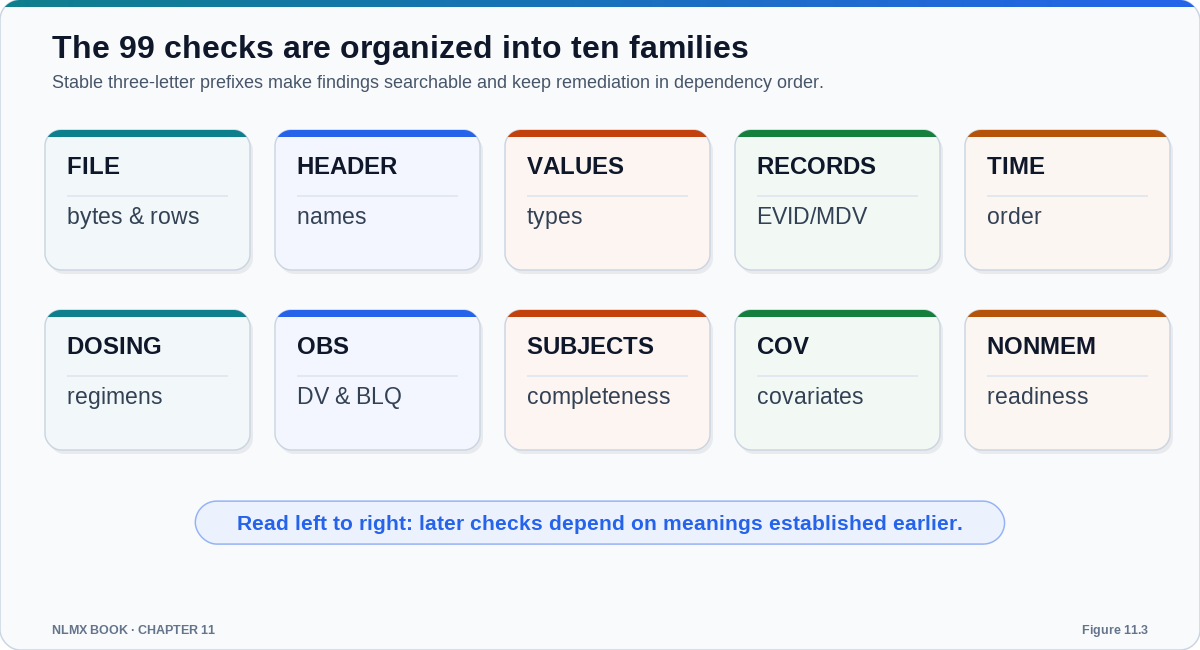
Figure 11.2. Check prefixes form a navigation system: FIL, HDR, VAL, REC, TIM, DOS, OBS, SUB, COV and NMT.
Safe working rule
qc-data reports conditions; it does not know the authoritative clinical fact. Investigate a finding against source data, protocol, data-transfer specification and assay documentation. Correct the upstream source or controlled analysis dataset, assign a new version, and rerun the complete QC. Never “repair” a value merely to make a warning disappear.