11.30 Case study 3: dosing and same-time records
The defective fixture includes ADDL=2 with II=0 on subject 2's dose. REC14 fails because two additional doses have no scheduling interval. It also includes two observations for subject 2 at TIME 1/CMT 2 with different DV; REC18 warns.
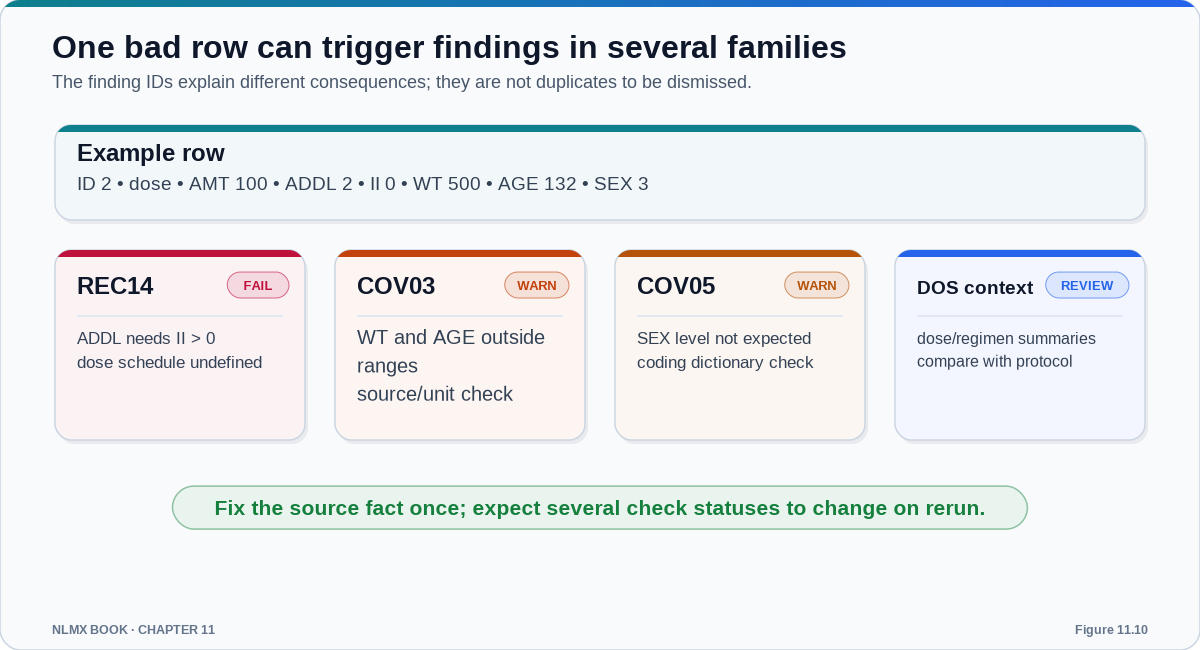
Figure 11.14. A dose row can simultaneously violate regimen and covariate expectations. Findings describe distinct consequences of the same source row.
Questions for the dose
Was the subject intended to receive one dose, or three doses separated by a known interval? If three, verify II from protocol/administration data. If one, ADDL should be zero. Do not choose the value that makes the check pass.
Questions for the observations
Are the two TIME 1 samples analytical replicates, different analytes missing DVID, duplicate transfers, or one incorrect time? If replicates, define the prespecified representation. If different analytes, add/repair DVID and model mappings.
Same-time dose/sample
When a dose and sample share time, order states whether the sample is pre- or postdose. A generic deduplication or sort can change this meaning without changing any numeric time.
Two defensible outcomes
If source documents confirm three doses 12 hours apart, the corrected row uses ADDL 2 and II 12 and the expanded regimen is reviewed. If they confirm one dose, ADDL becomes 0 and II remains 0. For the two observations, a documented replicate rule may retain both, select a validated result, or derive one value. The choice must come from the analysis plan—not from which option produces a smoother profile.
Common mistakes
- Adding a common 24-hour II by assumption.
- Averaging same-time DVs without a replicate rule.
- Adding a tiny time offset merely to separate records.
- Ignoring DVID/CMT when comparing same-time observations.
Checklist
- Reconstruct intended regimen from source.
- Classify same-time observations by analyte/replicate status.
- Preserve true event order.
- Confirm downstream subject and sampling summaries.
Further reading
See repeat/duplicate checks, dosing checks and equal-time ordering.