36.3 Configuration, output folders, and path resolution
This chapter is a lookup reference for nlmx 4.16.1. Option tables are generated from the installed release executable. Read an option in the context of the command page: nlmx uses a global parser, but an accepted option can be irrelevant to a command unless its help text names that command or the command's method chapter defines the behavior.
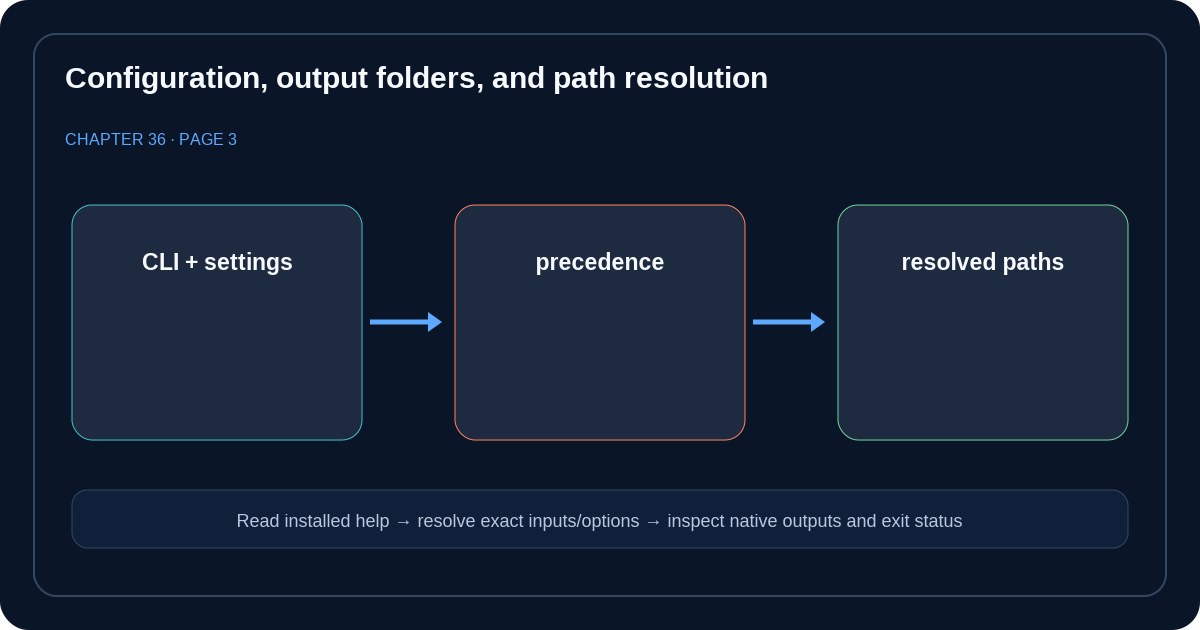
The safe sequence is: identify the installed version, open that command's help, freeze input/settings/output paths, run into a new or empty output directory, inspect both the process status and the command-native verdict, and retain the log/resolved settings/checksums. A command line is reproducible only when its referenced files and software version are also frozen.
Precedence and path bases
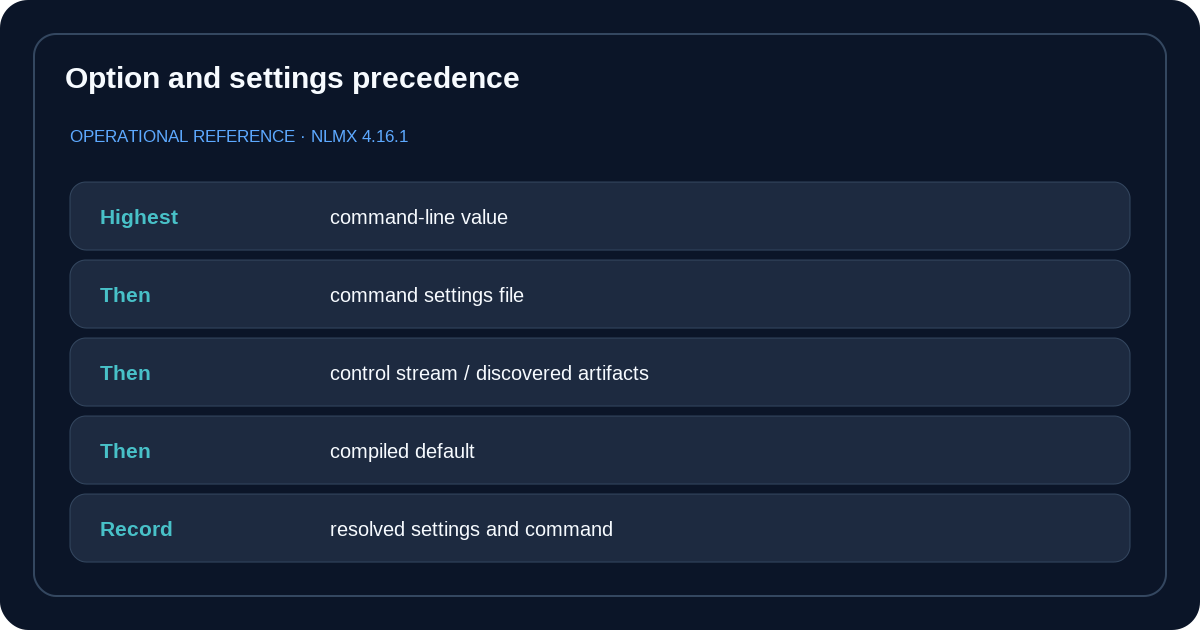
Command-line values override corresponding settings-file values. Settings override discovered/control-stream/default values according to the command. This does not mean every command-line value has a settings equivalent. The authoritative resolved settings or command record in the output is the evidence of what won.
Relative paths in a settings file normally resolve against that file's folder. Relative paths typed on the command line resolve from the process starting directory. A control stream can resolve $DATA relative to its own conventions. Output files and cached run artifacts can introduce another base. Use absolute paths in automated cross-directory workflows, but keep relocatable relative paths when the project structure is deliberately packaged and tested.
--output selects a command output directory; most analysis commands protect non-empty directories unless --overwrite is explicit. Overwrite is destructive to evidence lineage even if individual files are merely replaced. Prefer a new run folder named with model/run/version context. --run-dir is not an output alias: it identifies an existing checkpointed run for resume.
The configuration extension is part of validation: .covar, .qcd, .qcn, .eda, .custom, .report, .nca, .init, .screen, .vpc, .forest, .sims, .er, .power, .gen, and .ask serve different schemas.
Novice review checklist
- Can you identify the exact installed nlmx version and canonical command?
- Are positional inputs, named options, settings, and output paths unambiguous?
- Did you distinguish parser acceptance from command-specific meaning?
- Will the run preserve enough native evidence to determine semantic success?
- Is a qualified human decision required after the software completes?
Navigation
See the previous page, next page, and complete command index.