36A.22 Visual QA, accessibility, troubleshooting, and exit codes
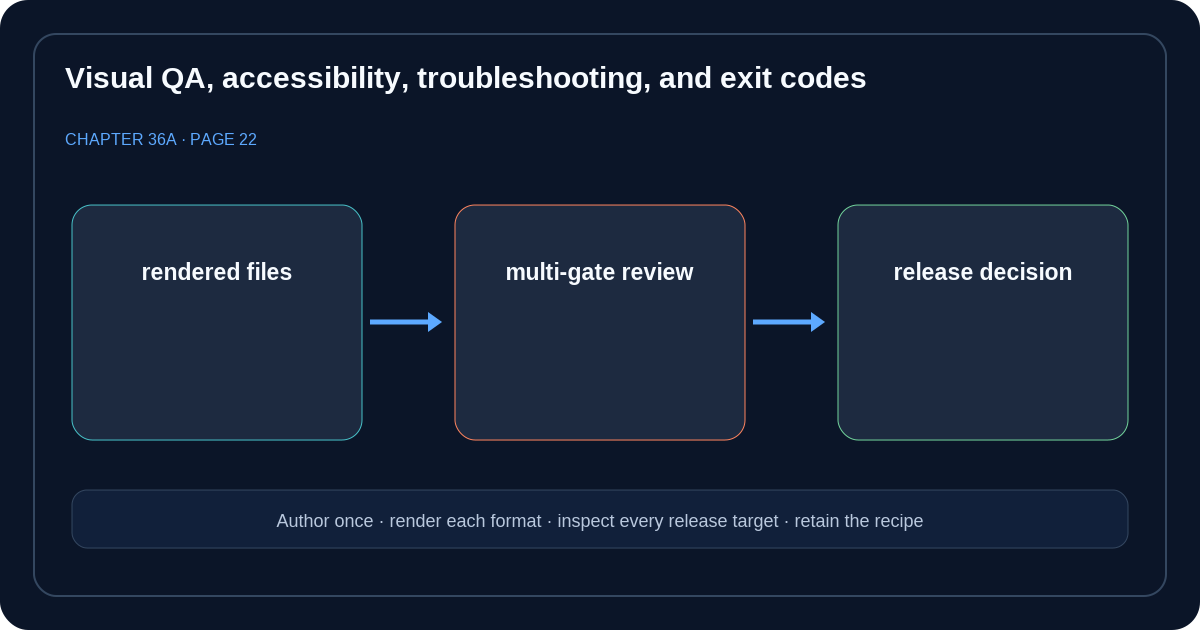
nlmx report publishes one Markdown source into retained Markdown, Word and PDF by default, with optional HTML. The command solves document generation; it does not validate the scientific analysis or approve its interpretation. Treat the source Markdown and .report file as the controlled recipe, and treat every released format as a separate review target.
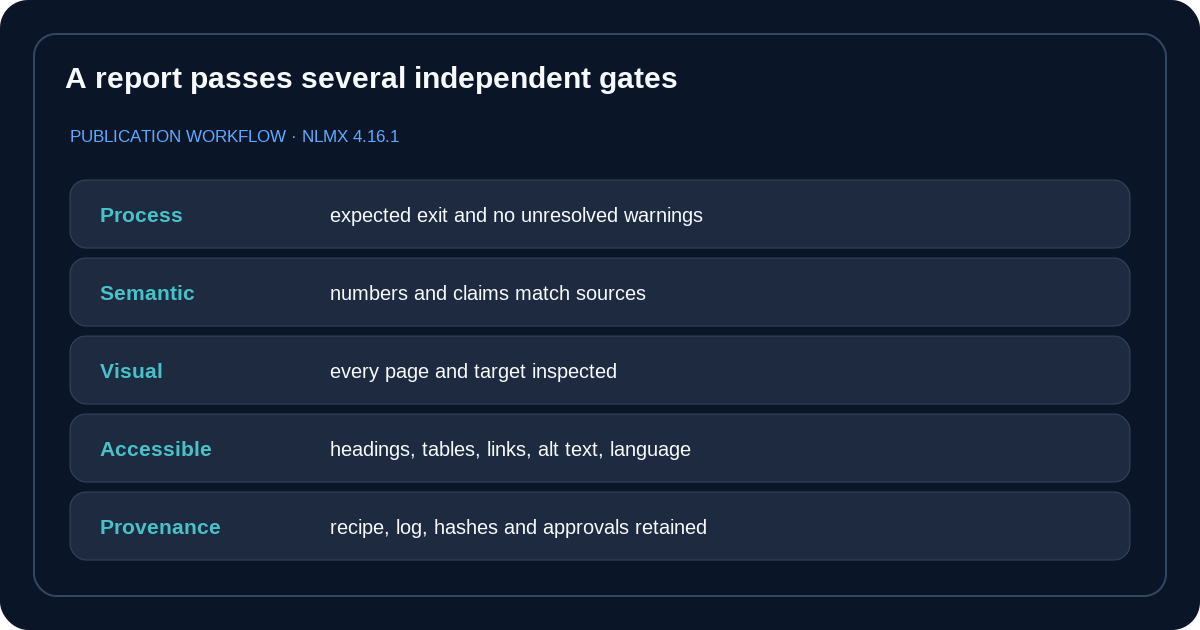
Five independent release gates
- Process: expected exit code, output set and no unresolved warnings.
- Semantic: claims/numbers match native files; units, populations, methods and uncertainty are correct.
- Visual: every page/target inspected for clipping, overlap, broken glyphs, table/figure/code/equation defects and navigation.
- Accessibility: meaningful headings, language, readable link text/alt text, table headers, contrast and sensible reading order.
- Provenance: source/settings/log/hashes/upstream evidence and review disposition retained.
Common failures: source conflict (exit 2); missing/unwritable/existing output (3); invalid/unknown settings or out-of-range page/margin/font/TOC depth (4); unreadable Markdown text (7); empty Markdown (10). Missing images/equation problems can be warnings with exit 0, so logs must be reviewed. Web images are not fetched; raw HTML is target-specific; unsupported equation commands degrade with warnings; Word TOC may need field update.
The executed QA record distinguishes what was proved. PDF pages were visually inspected. DOCX structure was verified, but the required bundled LibreOffice renderer was unavailable, so Word visual verification remains unchecked. The stdin run exited 0 with a missing-image warning. These are deliberate examples of honest evidence boundaries.
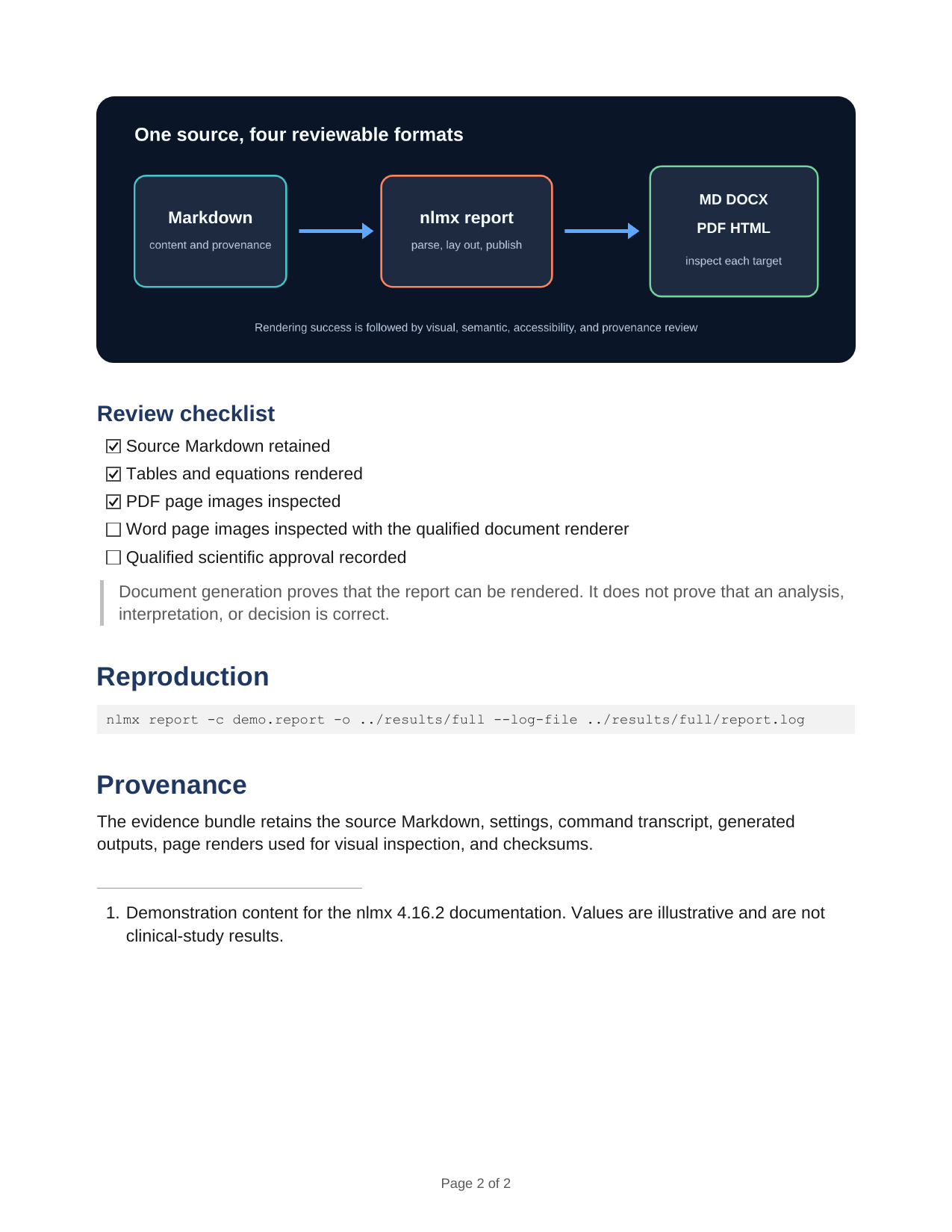
Release only the formats that passed their applicable gates. Regeneration after any content/layout change invalidates prior visual approval.
Troubleshooting order
Start with the first process error and its exit class. For exit 2, inspect mutually exclusive input sources and shell quoting. For 3, inspect resolved output/log paths and overwrite protection. For 4, regenerate the template and check unknown keys/ranges. For 7, check encoding/readability. For 10, verify the producer actually emitted Markdown. For exit 0 with warnings, fix missing images or malformed equations and rerun. If a format looks wrong, reproduce from unchanged source/settings, isolate the smallest failing construct, retain the bad output/log, and compare target-specific behavior rather than editing the generated file.
Practical review questions
- Does the released content answer the stated question without exceeding the evidence?
- Can every number, table, figure and decision be traced to a retained native file and run?
- Were all generated targets—not merely the source—inspected after the latest change?
- Are warnings, failed runs, limitations and unverified steps visible rather than silently omitted?
- Could another qualified analyst rebuild the same document from the retained recipe?
Navigation
See the previous page, next page, and complete report reference.