12.2 What is checked and in what order
qc-nm runs 81 checks in ten families. Dependencies matter: code findings are unreliable if required records cannot be parsed, and dataset reconciliation is impossible when the dataset is not available.
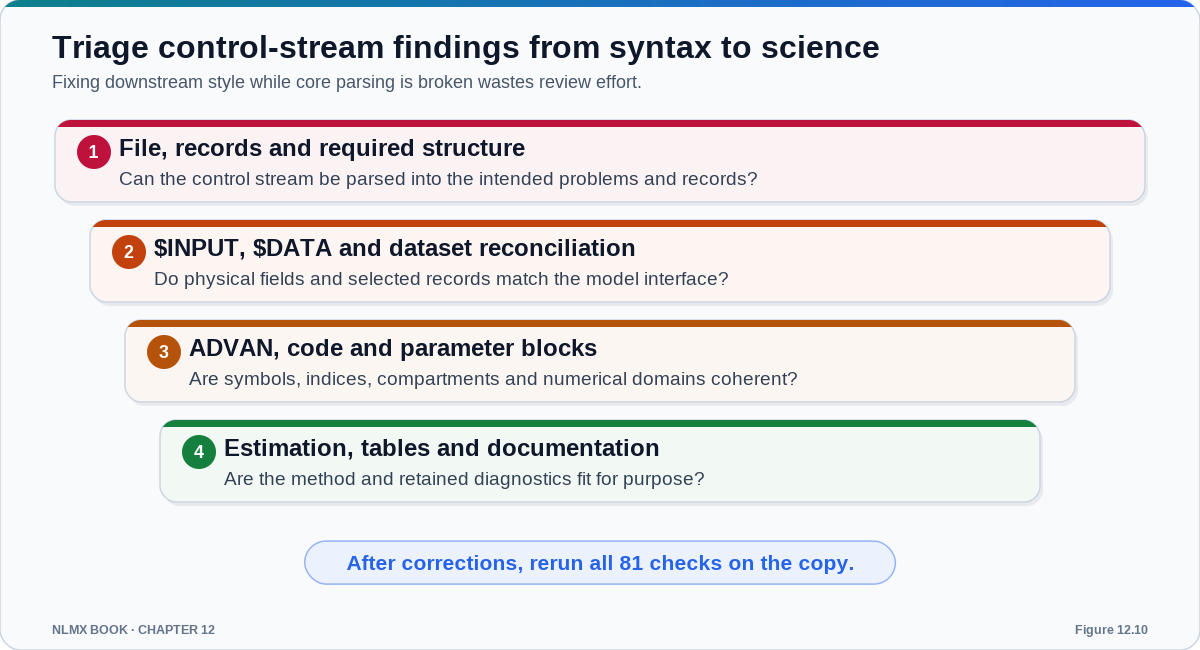
Figure 12.4. Triage from file and record structure through interfaces and numerical code to method/output conventions.
Statuses are PASS, COMMENT, WARN, FAIL and N/A, with the same meaning introduced in Chapter 11. Before-fix and after-fix statuses appear together in the checklist when a corrected copy exists.
Dependency order
- FIL reads bytes/lines.
- REC constructs problems and records.
- INP and DAT establish the dataset interface.
- SUB establishes compartments/required PK variables.
- COD parses abbreviated code and symbol use.
- PAR validates THETA/OMEGA/SIGMA.
- EST validates estimation/covariance choices.
- TAB validates retained items/files.
- DOC reports missing description/labels/header metadata.
Checks that cannot answer their question should be N/A with a reason rather than misleadingly PASS.
The families are a review sequence, not ten isolated scores. For example, a missing dataset can make several DAT questions unavailable, and a code parse failure can reduce confidence in symbol-use checks. Correct the earliest blocking defect, rerun, and then reconsider later findings. Do not total PASS values into a percentage grade: one data-selection FAIL can matter more than many formatting PASS results.
Verdict after correction
When corrections create a new analysis, pipeline failure policy judges the after-fix results. The original NOT READY state is still preserved in reports. A correction that removes a finding does not erase evidence that the source had it.
Common mistakes
- Fixing documentation comments before parsing failures.
- Treating N/A as PASS after disabling dataset checks.
- Comparing only overall verdicts across versions.
- Forgetting that after-fix analysis uses the corrected text but the same dataset/settings.
Checklist
- Review families in dependency order.
- Read before and after columns together.
- Investigate every N/A reason.
- Use stable check IDs in dispositions.
Further reading
See status vocabulary, output review and limits.