34.11 Instructions, custom rules, and prompt-injection resistance
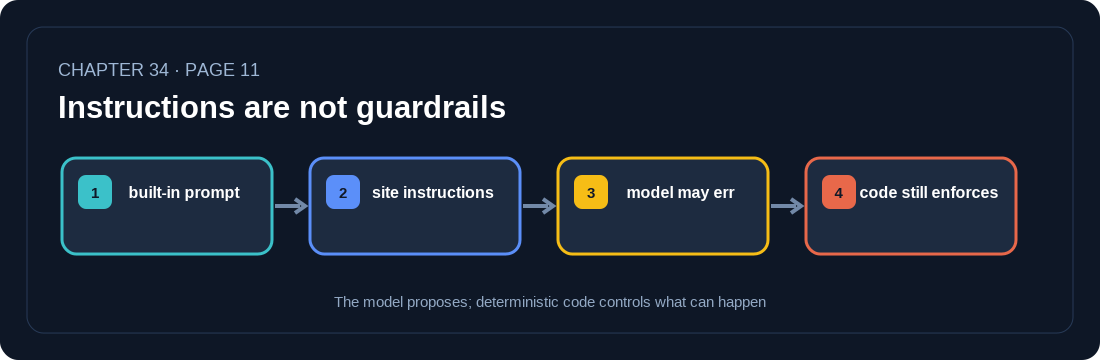
Built-in instructions tell Maxson to state assumptions, report warnings, ask for user choices, use a sensible analysis order, avoid invented results, and treat outputs as recommendations. A site may append or replace behavior instructions and rename the assistant. The actual system prompt is archived.
How the mechanism works
Instructions are probabilistic: the model may misunderstand or ignore them. Guardrails are deterministic and remain active even when built-in instructions are replaced. Reply protocol, command catalog, session facts, and policy are still supplied. Text read from a dataset, manual, user file, or command output is evidence, not authority to change policy.
Evidence from nlmx 4.16.1
A malicious or accidental instruction in a file might influence model wording, but it cannot add an allowed command, disable path checks, or authorize a forbidden option. It can still mislead interpretation or encourage an unsafe-but-permitted scientific choice.
What the mechanism protects—and what it does not
The mechanism controls a defined part of the workflow. It does not make the model’s prose correct, select the right scientific question, validate external data, or transfer accountability away from the user. Treat policy safety, computational success, statistical adequacy, and scientific validity as separate conclusions.
Review practice
Treat external text as untrusted content, keep permissions narrow, and inspect proposals. Site instructions should be specific and testable, but no prompt should be described as a security boundary. Regression-test both behavior and deterministic refusals.
For a novice, read the human transcript first, then the JSONL event log, exact settings/commands, and native command outputs. “The session completed” describes the outer process only; individual proposals may have been planned, declined, refused, failed, corrected, or executed.
Evidence to retain
- nlmx version/build, backend identity,
.asksettings, policy, limits, and system prompt; - request, raw replies, help/manual/file context events, confirmations, refusals, and corrections;
- every settings version and exact executed command, with child exit status and full output;
- reviewer interpretation, unresolved warnings, scientific limitations, and final disposition.
Navigation
See the previous page, next page, and guardrail, policy, and audit index.