36A.18 HTML output, CSS, MathML, and embedded images
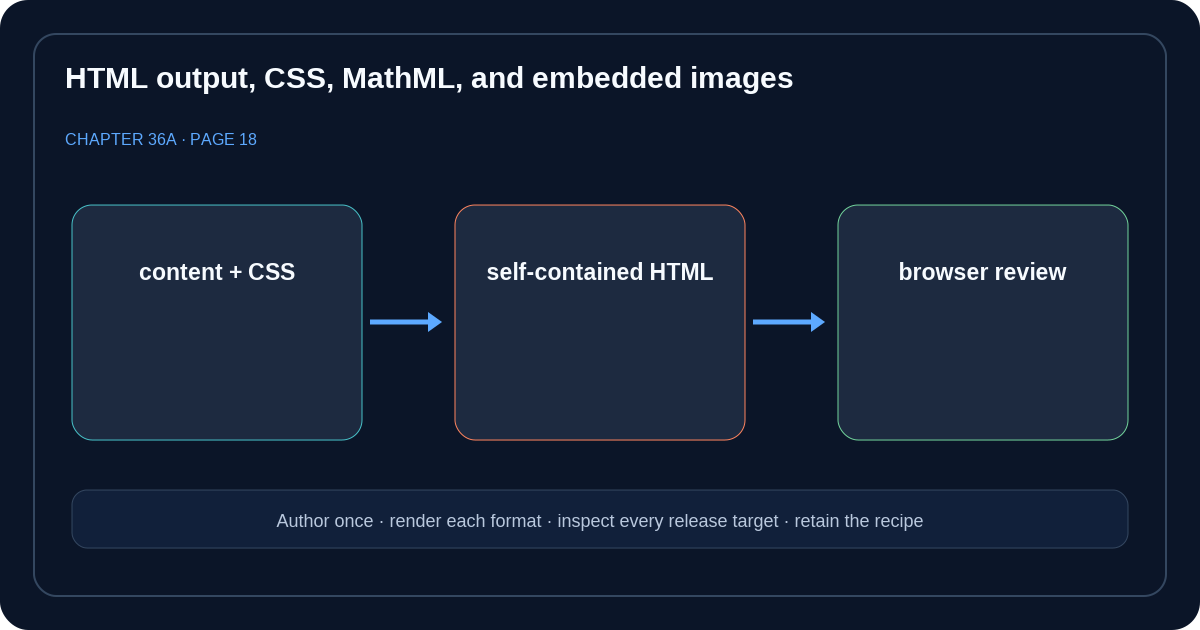
nlmx report publishes one Markdown source into retained Markdown, Word and PDF by default, with optional HTML. The command solves document generation; it does not validate the scientific analysis or approve its interpretation. Treat the source Markdown and .report file as the controlled recipe, and treat every released format as a separate review target.
Self-contained browser delivery
--html or [output] html=true enables HTML; --no-html disables it. The output contains semantic headings, lists, tables, code, links, footnote section, TOC navigation and MathML. It includes light/dark and print styles. By default local images are embedded as data URIs, making one portable file.
--css FILE or [html] css appends a stylesheet. Keep custom CSS conservative: body width, typography, table borders, print breaks and accessible contrast. CSS cannot repair weak hierarchy or oversized tables. Test at common viewport widths, browser zoom, dark mode if relevant, and print/PDF preview.
When embed_images=false, verify copied image paths are retained alongside HTML. Raw HTML from source can appear only here and unsafe script links are neutralized; do not depend on raw HTML for cross-format content.
The executed HTML was checked structurally for TOC navigation, MathML, embedded image data and supplied CSS. Browser visual review remains a release step for an HTML deliverable, especially after custom styling.
HTML acceptance record
Open the file with network access disabled to prove it is self-contained when embed_images=true. Test narrow and wide windows, zoom, keyboard navigation, light/dark presentation and print preview. Inspect headings and table semantics with browser accessibility tools when HTML is a formal deliverable. Confirm MathML is visible in supported browsers and CSS does not hide content or weaken contrast. When images are external files, move the complete folder to a temporary location and retest links. Archive the CSS with the recipe.
Practical review questions
- Does the released content answer the stated question without exceeding the evidence?
- Can every number, table, figure and decision be traced to a retained native file and run?
- Were all generated targets—not merely the source—inspected after the latest change?
- Are warnings, failed runs, limitations and unverified steps visible rather than silently omitted?
- Could another qualified analyst rebuild the same document from the retained recipe?
Navigation
See the previous page, next page, and complete report reference.