36A.7 Lists, task lists, quotations, and rules
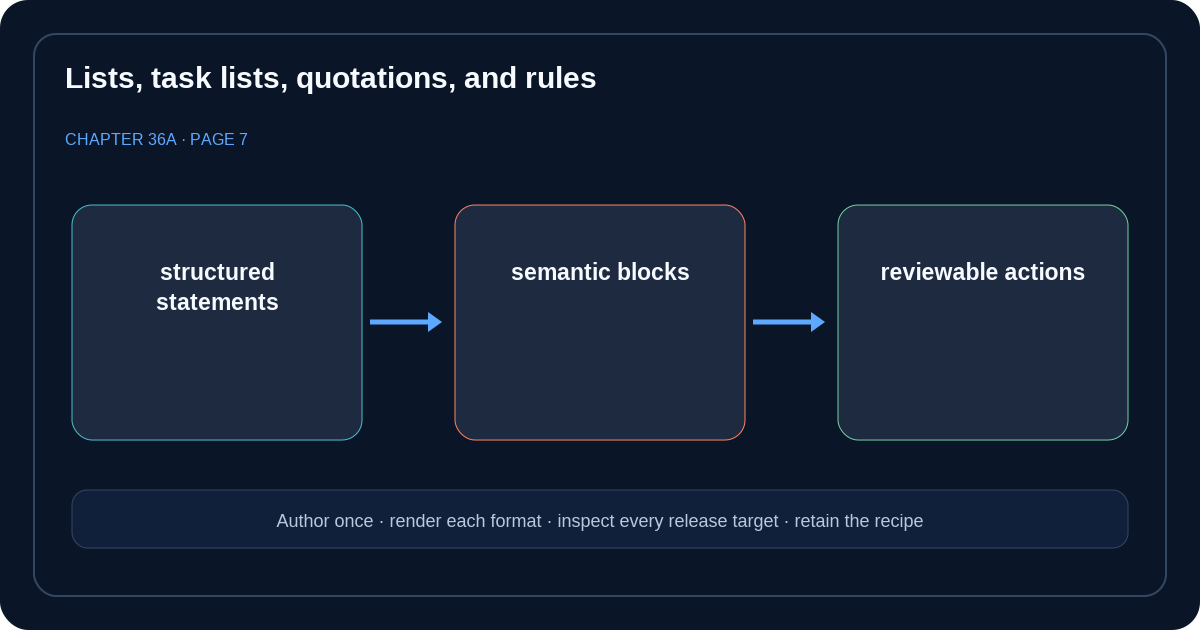
nlmx report publishes one Markdown source into retained Markdown, Word and PDF by default, with optional HTML. The command solves document generation; it does not validate the scientific analysis or approve its interpretation. Treat the source Markdown and .report file as the controlled recipe, and treat every released format as a separate review target.
Lists as meaning, not decoration
Bulleted lists are useful for unordered assumptions, limitations and deliverables. Numbered lists express order and can start from a chosen number. Nested lists preserve hierarchy when indentation is consistent. Keep each item grammatically parallel and avoid turning long paragraphs into bullets without a scanning benefit.
Task lists (- [x] and - [ ]) become checkable-looking items in rendered outputs. They are visual status markers, not electronic signatures or workflow records. State who completed the check and when elsewhere if that matters.
Block quotes are suitable for a protocol criterion or a clearly attributed statement. Do not use them as decorative callout boxes. Horizontal rules can separate major document phases but should not appear directly below titles or every heading.
Lists and quotes can break awkwardly across pages. Inspect indentation, markers, nesting, spacing and whether a heading is stranded at the page bottom. When an item contains a table, figure or code block, consider a short introductory paragraph and a deliberate page break strategy rather than deep nesting.
Status-list discipline
If a task list appears in a controlled report, define what [x] means and who owns it. Do not mark “model adequate” or “analysis approved” as a casual checkbox; those decisions need supporting criteria and approval records. Use numbered lists for procedures whose order matters and bullets for unordered findings. Avoid more than two nested levels unless the hierarchy is essential. During PDF/Word review, check every continuation page for lost indentation or separated markers. During HTML review, confirm list semantics remain visible without custom CSS.
Practical review questions
- Does the released content answer the stated question without exceeding the evidence?
- Can every number, table, figure and decision be traced to a retained native file and run?
- Were all generated targets—not merely the source—inspected after the latest change?
- Are warnings, failed runs, limitations and unverified steps visible rather than silently omitted?
- Could another qualified analyst rebuild the same document from the retained recipe?
Navigation
See the previous page, next page, and complete report reference.