36.4 Logging, audit evidence, and reproducible reruns
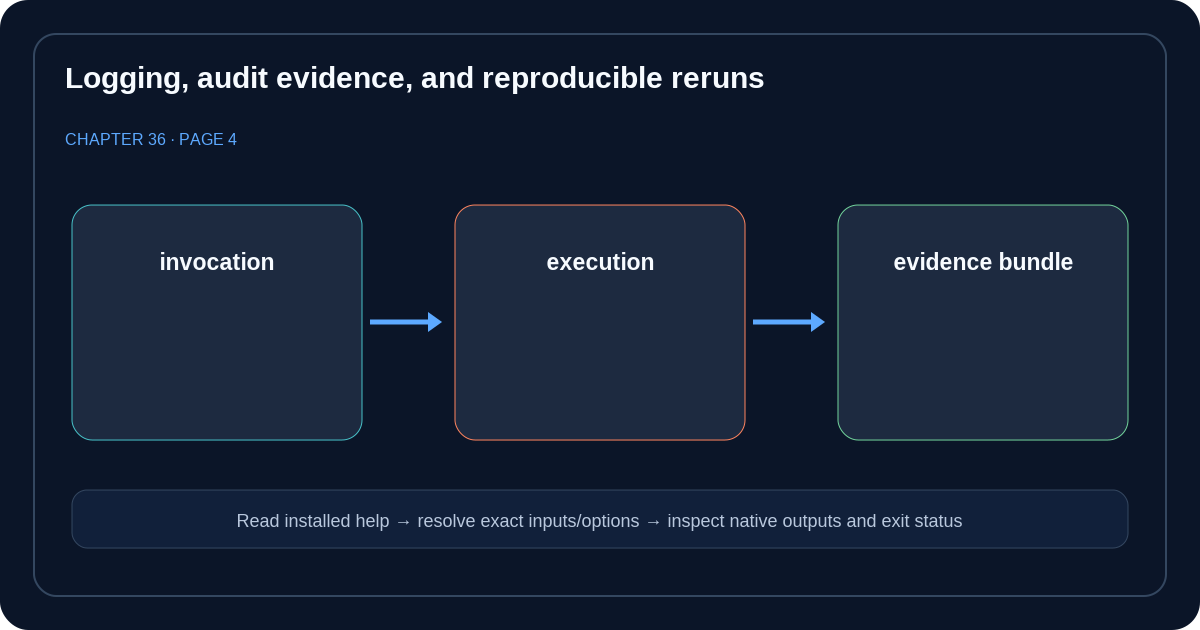
This chapter is a lookup reference for nlmx 4.16.1. Option tables are generated from the installed release executable. Read an option in the context of the command page: nlmx uses a global parser, but an accepted option can be irrelevant to a command unless its help text names that command or the command's method chapter defines the behavior.
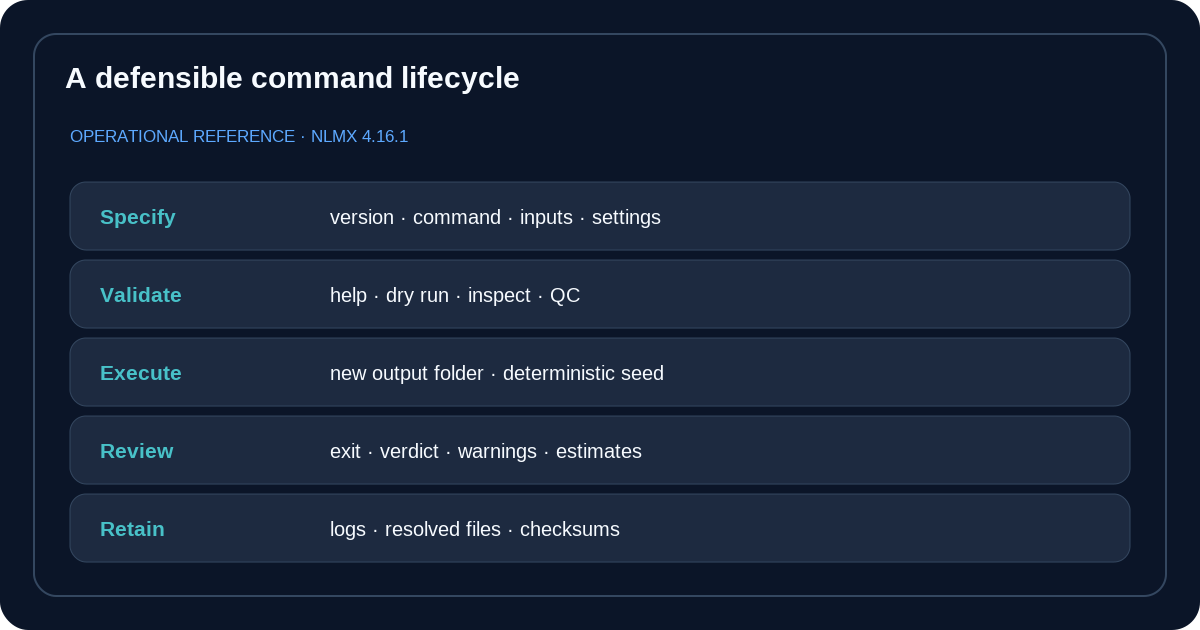
The safe sequence is: identify the installed version, open that command's help, freeze input/settings/output paths, run into a new or empty output directory, inspect both the process status and the command-native verdict, and retain the log/resolved settings/checksums. A command line is reproducible only when its referenced files and software version are also frozen.
What to retain for a rerun
Retain the exact command, software version/build identity, starting directory, settings file, resolved settings/options, control stream, data and all selected model artifacts. Keep the generated log, checksums, native summaries/verdicts, warnings, exclusions, convergence/covariance diagnostics, and plots/tables used for decisions. A screenshot alone is not an audit record.
--log-file changes the transcript location; --suppress-console 1 and -q change terminal visibility but not the need to inspect logs. --no-color or NO_COLOR makes redirected text stable. --keep-subject-ids changes privacy behavior and should be an explicit governed exception. --seed controls supported stochastic components, but determinism also depends on version, settings, inputs, algorithms, and sometimes parameter files.
Every successful analytical output folder should have a checksum manifest. Verify it after transfer and before review. Checksums detect byte changes; they do not establish who ran the command, whether the method was appropriate, or whether the result is scientifically acceptable. Couple integrity with provenance and qualified review.
Novice review checklist
- Can you identify the exact installed nlmx version and canonical command?
- Are positional inputs, named options, settings, and output paths unambiguous?
- Did you distinguish parser acceptance from command-specific meaning?
- Will the run preserve enough native evidence to determine semantic success?
- Is a qualified human decision required after the software completes?
Navigation
See the previous page, next page, and complete command index.