Chapter 14. NCA: theory and method
Non-compartmental analysis (NCA) summarizes a concentration–time profile using observed extrema, numerical integration, and a terminal log-linear regression. It does not fit a compartmental structural model, but it still contains consequential assumptions about profile boundaries, route, BLQ values, interpolation, terminal points, and extrapolation.
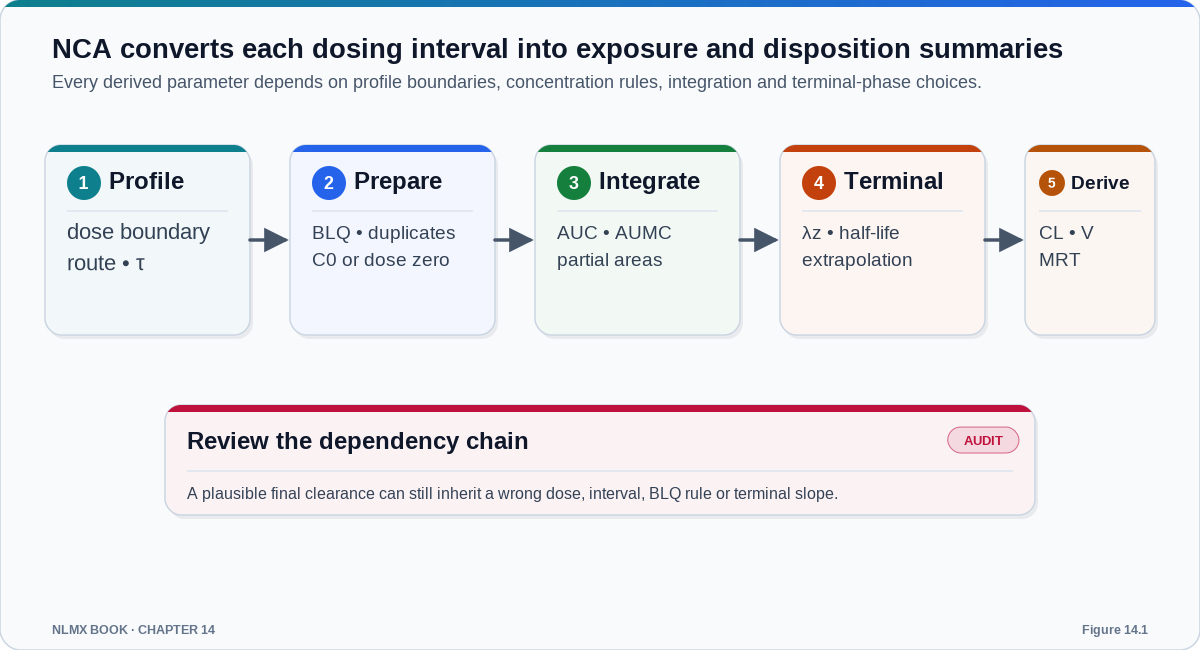
Figure 14.1. Every final parameter inherits decisions made while defining and preparing the profile.
Novice promise
This chapter derives each major quantity in plain language before using its abbreviation. It explains not only the formula but when the formula is meaningful, what input it depends on, and how a seemingly minor convention can propagate into clearance, volume, half-life, or steady-state exposure.
Scope and evidence
Method behavior was checked against docs/NCA.md, the program's tests, and a closed-form oral profile. Executable evidence uses local nlmx 4.3.0. pytools/ch14_examples.py generates a Bateman profile with known λz = 0.1 h⁻¹, half-life 6.931 h, AUC∞ = 1000 concentration·h, CL/F = 0.5 volume/h, and Vz/F = 5 volume units, then freezes nlmx outputs under documents/ch14/results.
The calculated evidence recovers λz ≈ 0.0999, half-life ≈ 6.941, AUC∞ ≈ 996, CL/F ≈ 0.502, and Vz/F ≈ 5.027. Differences from the closed form reflect finite sampling and numerical conventions, not an attempt to make the reference equal by construction.
Twenty-seven Markdown pages
This overview plus 26 pages cover notation/formulas, profile construction, all three integration rules, partial areas/AUMC, terminal-slope selection and diagnostics, extrapolation, derived/steady-state parameters, comparisons, BLQ and sparse sampling, route-specific issues, units/numerics, reference-tool validation, and a worked closed-form example.
Core caution
NCA is “non-compartmental,” not assumption-free. AUClast can be highly data-supported while AUC∞, half-life, clearance, and volume depend strongly on a short or misidentified terminal phase. Report flags and missing values honestly; a blank parameter is safer than a precise-looking number unsupported by the profile.