36A.11 Images, paths, copying, and missing-file warnings
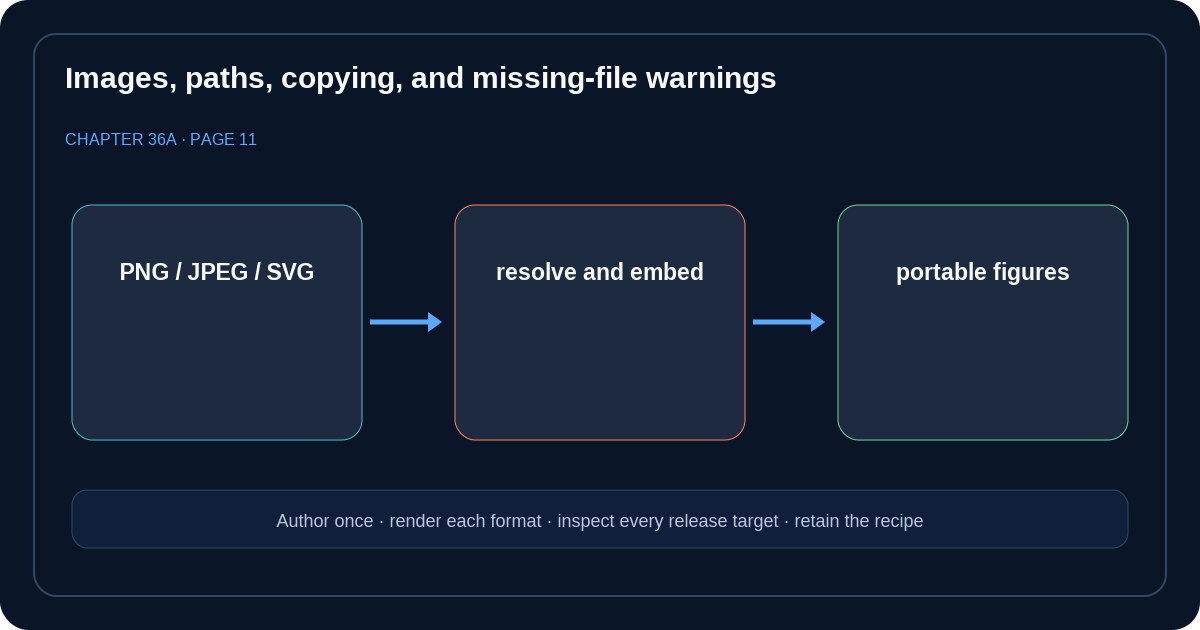
nlmx report publishes one Markdown source into retained Markdown, Word and PDF by default, with optional HTML. The command solves document generation; it does not validate the scientific analysis or approve its interpretation. Treat the source Markdown and .report file as the controlled recipe, and treat every released format as a separate review target.
Local images
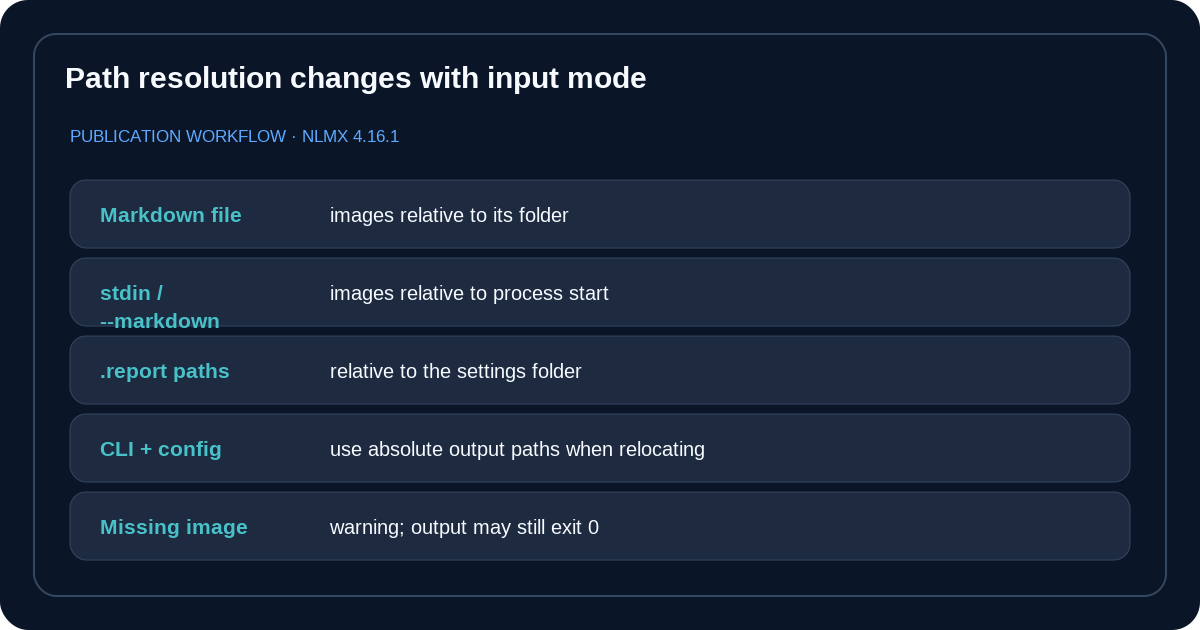
PNG, JPEG and SVG are supported. In file-input mode, relative paths are based on the Markdown file's folder. In stdin or --markdown mode, they are based on the process starting directory. .report paths are based on the settings file. This distinction is one of the most common portability failures.
Images are copied beside the retained Markdown. A path that stays inside the source folder can keep its name; an outside image can be copied under images/ and the written Markdown rewritten. HTML embeds local images as data URIs by default; [html] embed_images=false copies/references them instead. Word and PDF embed them and scale oversized graphics to text width using available resolution metadata.
Web images are never fetched. Missing/unreadable images generate a warning and appear as alt-text placeholders in fixed outputs, but the command can still exit 0. The executed stdin example demonstrates this: the source text was piped from another folder, so report-flow.svg was not found from the starting directory.
Use descriptive alt text that explains the figure's purpose. Open the image at publication size; verify labels, units, legend, color contrast, resolution and cropping. Retain the source plot settings and native data. Reference-style image paths can embed, but rewritten Markdown portability has documented limitations when relocation is required.
Portable-image test
Run the report from a clean copy of the project or temporarily use a different working directory. Confirm every local figure resolves and is copied/embedded as intended. Open copied files and compare hashes to source when exact identity matters. Inspect SVG text/font fallback and PNG/JPEG resolution at final size. Test alt text without seeing the image: it should identify what is plotted and why it matters, not repeat “image.” A missing-image warning is a release blocker even when the report command returns zero and writes all requested files.
Practical review questions
- Does the released content answer the stated question without exceeding the evidence?
- Can every number, table, figure and decision be traced to a retained native file and run?
- Were all generated targets—not merely the source—inspected after the latest change?
- Are warnings, failed runs, limitations and unverified steps visible rather than silently omitted?
- Could another qualified analyst rebuild the same document from the retained recipe?
Navigation
See the previous page, next page, and complete report reference.