34.1 The Maxson trust model
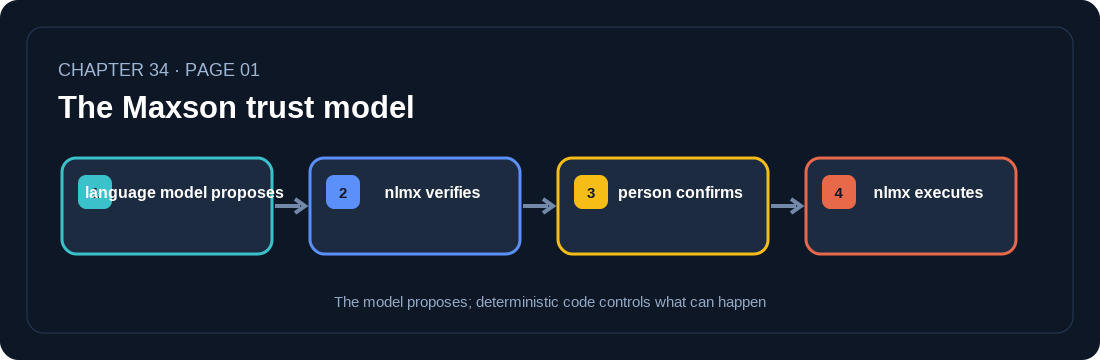
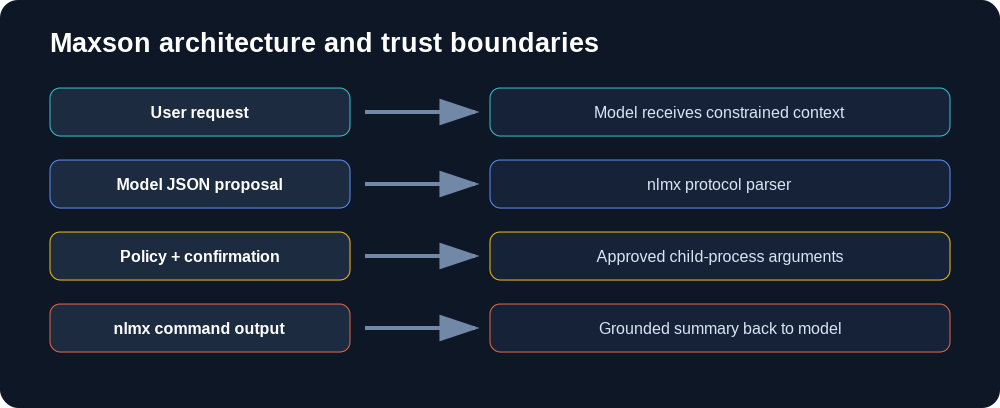
Maxson is the conversational layer of nlmx ask, not an independent execution environment. A small language model proposes structured actions; deterministic nlmx code parses them, applies policy, obtains confirmation when required, launches only approved nlmx commands, and returns bounded evidence to the model for explanation.
How the mechanism works
Keep four claims separate: the model can propose; the policy can approve or refuse; the command can succeed or fail; a qualified person can accept or reject the scientific interpretation. Passing one layer does not imply the next.
Evidence from nlmx 4.16.1
In the executed mock session, Maxson proposed qc-data; nlmx wrote a real .qcd file, inserted a session-owned output folder, ran a child process, captured a NOT READY verdict, and returned that result. The model did not calculate or invent the verdict.
What the mechanism protects—and what it does not
The mechanism controls a defined part of the workflow. It does not make the model’s prose correct, select the right scientific question, validate external data, or transfer accountability away from the user. Treat policy safety, computational success, statistical adequacy, and scientific validity as separate conclusions.
Review practice
Ask reviewers to identify the actor for every verb. “Maxson ran a model” is shorthand; the auditable statement is that Maxson proposed arguments and nlmx executed an approved command after the configured confirmation rule.
For a novice, read the human transcript first, then the JSONL event log, exact settings/commands, and native command outputs. “The session completed” describes the outer process only; individual proposals may have been planned, declined, refused, failed, corrected, or executed.
Evidence to retain
- nlmx version/build, backend identity,
.asksettings, policy, limits, and system prompt; - request, raw replies, help/manual/file context events, confirmations, refusals, and corrections;
- every settings version and exact executed command, with child exit status and full output;
- reviewer interpretation, unresolved warnings, scientific limitations, and final disposition.
Navigation
See the previous page, next page, and guardrail, policy, and audit index.