37.5 Dataset-QC settings: purpose, structure, and workflow
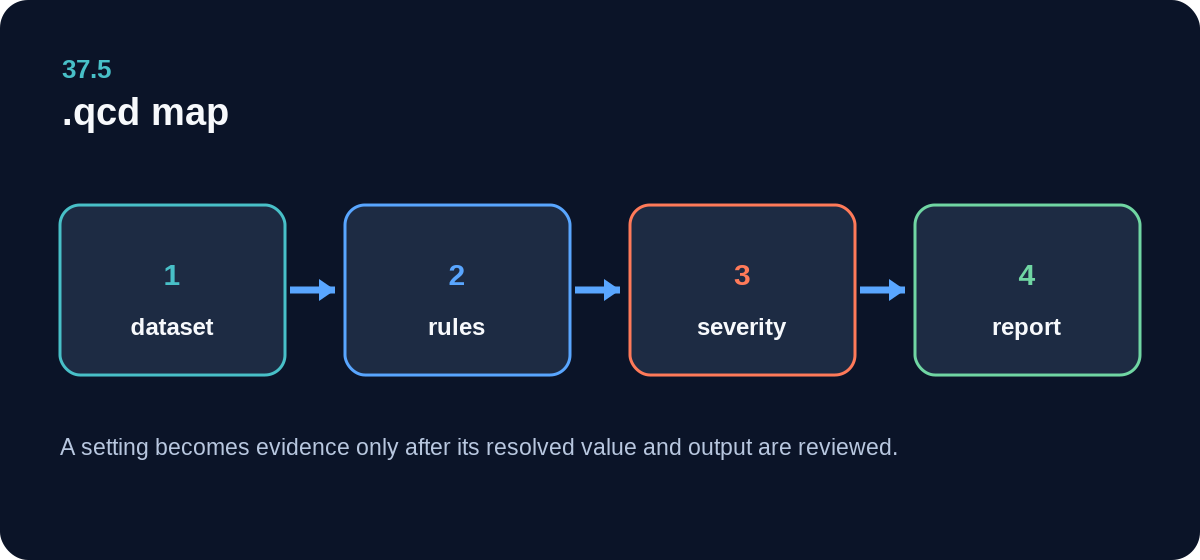
.qcd is the settings format for qc-data. It defines data roles, ranges, check activation, severity policy, report output and diagnostic figures for NONMEM-style dataset quality control. The template snapshot used here was generated by nlmx 4.16.2; its SHA-256 is e029bef9e091540c55c65c473f6e955a98700b52e47832666b5e1a224796beec.
Why this file matters
Disabling a check or lowering its severity can make the same defect appear acceptable without changing the underlying data. Treat the file as controlled analysis source. A reviewer should be able to connect each active value to a design decision, data convention, method choice, output requirement or operational guardrail.
Generate and begin safely
nlmx qc-data --print-config study.qcd
nlmx qc-data -c study.qcd --output disposable-review
For .covar, generate the reference with nlmx schema --format toml and save it with the required extension. For every format, compare command-specific help before relying on the generic example above; commands differ in positional inputs, validation modes and whether --output is appropriate.
Template map
The snapshot represents 233 unique dotted key paths across 19 tables or top-level groups. Commented assignments are possibilities or examples; uncommented assignments form the generated example. The next page catalogs every represented key.
| Table | Unique keys represented | Review focus |
|---|---|---|
data |
18 | values and interactions inside this settings group |
columns |
4 | values and interactions inside this settings group |
file |
3 | values and interactions inside this settings group |
header |
5 | values and interactions inside this settings group |
values |
6 | values and interactions inside this settings group |
events |
5 | values and interactions inside this settings group |
time |
7 | values and interactions inside this settings group |
dosing |
6 | values and interactions inside this settings group |
observations |
13 | values and interactions inside this settings group |
subjects |
3 | values and interactions inside this settings group |
covariates |
14 | values and interactions inside this settings group |
covariates.ranges |
8 | values and interactions inside this settings group |
covariates.levels |
2 | values and interactions inside this settings group |
checks |
2 | values and interactions inside this settings group |
severity |
99 | values and interactions inside this settings group |
output |
9 | values and interactions inside this settings group |
figures |
14 | values and interactions inside this settings group |
plots |
9 | values and interactions inside this settings group |
plots.colors |
6 | values and interactions inside this settings group |
Important interactions
- Column-role overrides must match the analysis dataset actually supplied.
- Range and level rules are study-specific assertions, not universal clinical limits.
[checks]controls execution while[severity]controls disposition; review both together.- Use
--list-checksto reconcile names before editing a large policy file.
Novice workflow
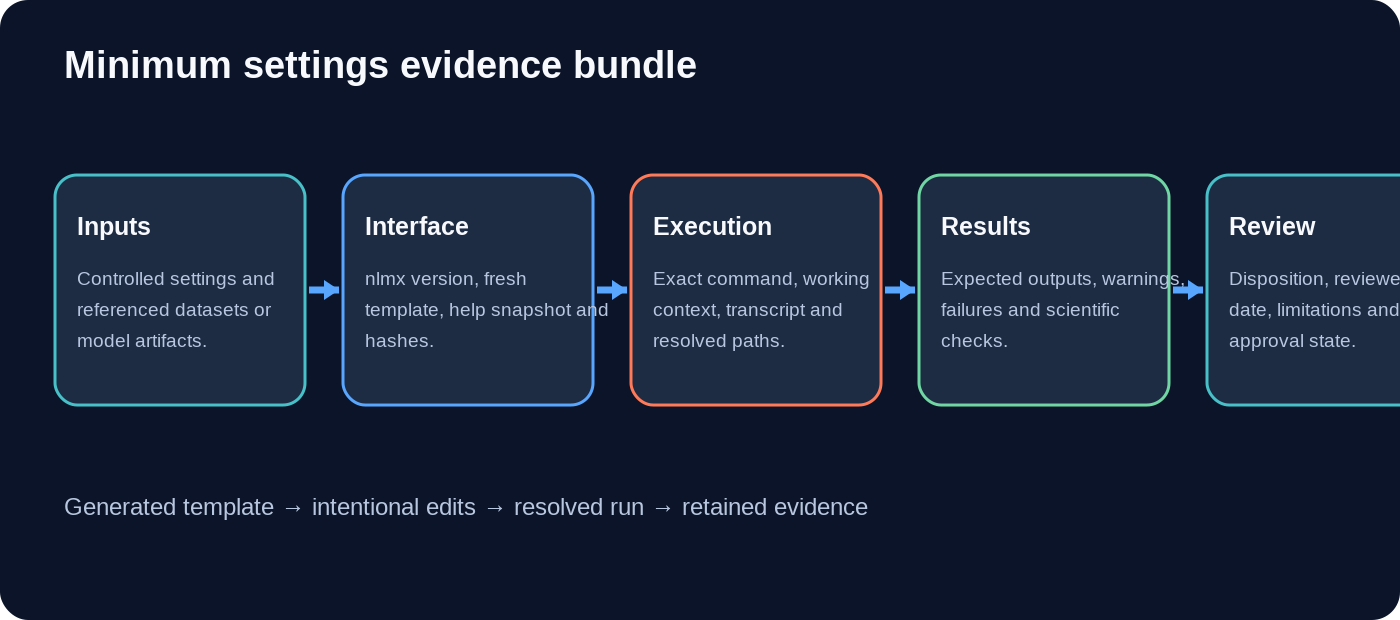
First identify the input population and artifact version. Second, delete or leave commented every option you do not intend to control. Third, edit one table at a time and keep short comments explaining study-specific values. Fourth, run into a new disposable folder and verify resolved inputs, paths, warnings and output count. Fifth, compare the result with the scientific question and expected behavior. Finally, retain the settings, command transcript and reviewed outputs together.
What validation can and cannot prove
Parsing proves that TOML syntax and recognized keys are acceptable. Command validation may prove that referenced data and values satisfy implemented checks. Neither proves that the selected population, endpoint, method, threshold or model is scientifically justified. That judgment belongs in the analysis plan and review record.
The exact generated snapshot is available at documents/ch37/reference/templates/nlmx.qcd.
Navigation
See the previous page, next page, and complete settings reference.