36A.12 Titles, authors, dates, language, and file names
nlmx report publishes one Markdown source into retained Markdown, Word and PDF by default, with optional HTML. The command solves document generation; it does not validate the scientific analysis or approve its interpretation. Treat the source Markdown and .report file as the controlled recipe, and treat every released format as a separate review target.
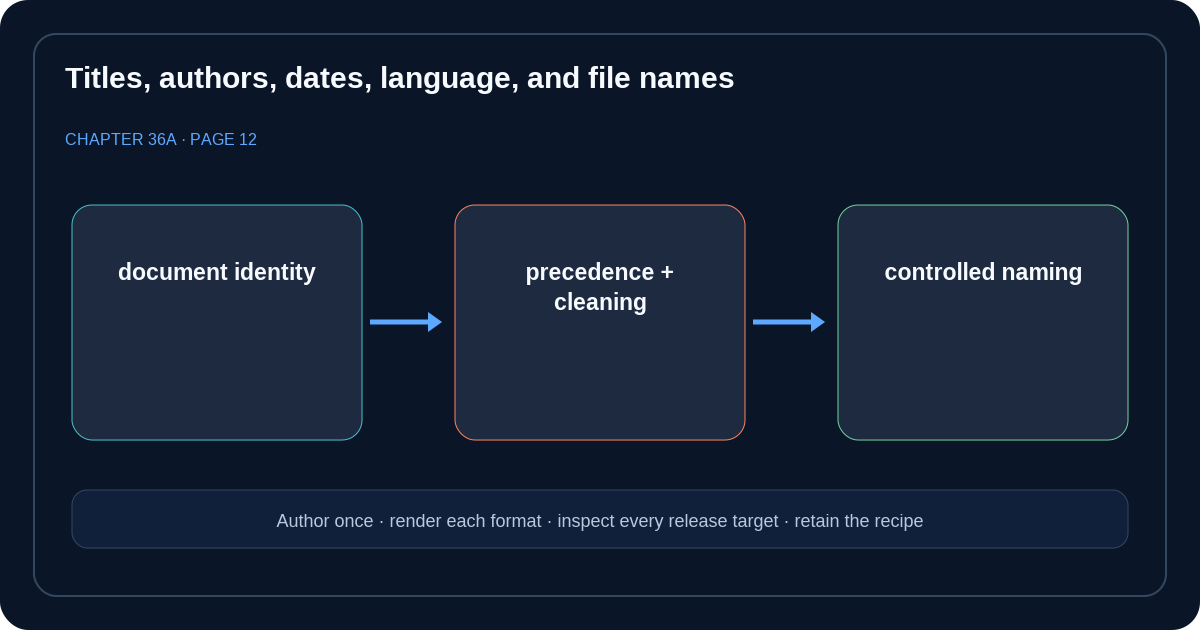
Document identity
Set a plain, specific title; optional subtitle; responsible author/team; meaningful date; and language code. date="today" writes the current date, which is convenient but can make rebuilds differ. For frozen deliverables, use the approved report date explicitly.
Language affects Word and HTML metadata and supports spellchecking/accessibility behavior; it does not translate content. Use a valid code consistent with the actual prose. Author metadata is visible in PDF/DOCX properties and should reflect the responsible authoring entity, not an automated tool unless that is intentional.
--file-name/[output] name defines the base name with no folder or extension. Forbidden filename characters are replaced, and known output extensions are removed. Choose stable names containing study/report identity and perhaps version/status, while using folders rather than extremely long filenames for chronology.
Metadata precedence is CLI, .report, YAML front matter, then title fallback from the first level-1 heading. Record the effective choices in review. Title metadata and on-page title should agree; filename alone is not a title.
Naming convention example
Use a stable pattern such as STUDY_ANALYSIS_REPORT_v1.0 and keep status/date in controlled metadata or folder structure. Avoid ambiguous names such as final2_revised. Decide whether the date represents analysis execution, content cutoff, approval or publication, and label it consistently. Before release, inspect file properties and title page for author/date/title agreement. If today is used during drafting, replace it with an approved explicit date for a frozen deliverable. Rebuild after renaming through --file-name; do not manually rename only one format and break the set.
Practical review questions
- Does the released content answer the stated question without exceeding the evidence?
- Can every number, table, figure and decision be traced to a retained native file and run?
- Were all generated targets—not merely the source—inspected after the latest change?
- Are warnings, failed runs, limitations and unverified steps visible rather than silently omitted?
- Could another qualified analyst rebuild the same document from the retained recipe?
Navigation
See the previous page, next page, and complete report reference.