36.34 Environment variables and external runtime context
This chapter is a lookup reference for nlmx 4.16.1. Option tables are generated from the installed release executable. Read an option in the context of the command page: nlmx uses a global parser, but an accepted option can be irrelevant to a command unless its help text names that command or the command's method chapter defines the behavior.
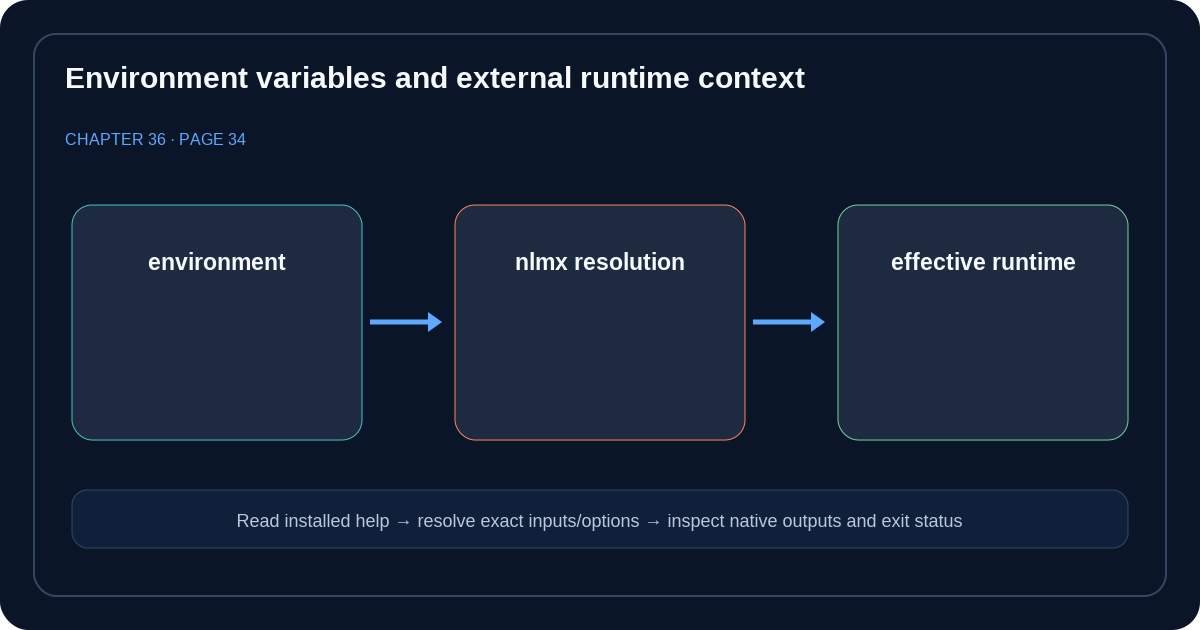
The safe sequence is: identify the installed version, open that command's help, freeze input/settings/output paths, run into a new or empty output directory, inspect both the process status and the command-native verdict, and retain the log/resolved settings/checksums. A command line is reproducible only when its referenced files and software version are also frozen.
Supported runtime variables
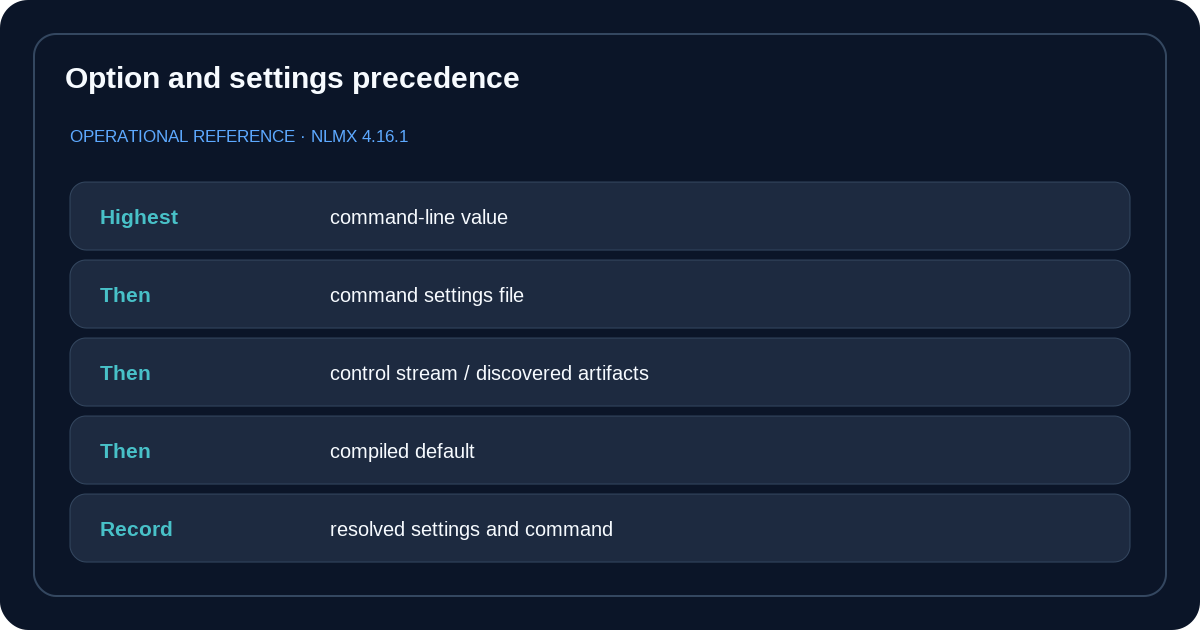
NO_COLOR disables ANSI color when present, which is useful for logs, CI, redirection, and text comparison. NLMX_MODEL supplies the embedded Maxson GGUF path when neither --llm-model nor [model] path provides one; explicit CLI and settings choices take precedence as documented in Chapter 35.
Operating-system PATH affects how the shell finds nlmx and any required runtime libraries. Record the resolved executable (Get-Command nlmx in PowerShell or command -v nlmx in POSIX shells) when multiple installations may exist. Current analytical commands are designed to run offline; the server backend for ask is a separately governed network/runtime choice.
CUDA library paths are startup environment concerns for GPU-enabled executables, not analysis settings. Variables whose names begin NLMX_TEST_ are internal test hooks and must not be used as operational controls. Environment variables are invisible in a copied command line, so capture relevant values in the run record.
Novice review checklist
- Can you identify the exact installed nlmx version and canonical command?
- Are positional inputs, named options, settings, and output paths unambiguous?
- Did you distinguish parser acceptance from command-specific meaning?
- Will the run preserve enough native evidence to determine semantic success?
- Is a qualified human decision required after the software completes?
Navigation
See the previous page, next page, and complete command index.