11.27 Triage, correction and rerun
Fix findings in dependency order. A malformed row can create false event, time, observation and covariate findings downstream.
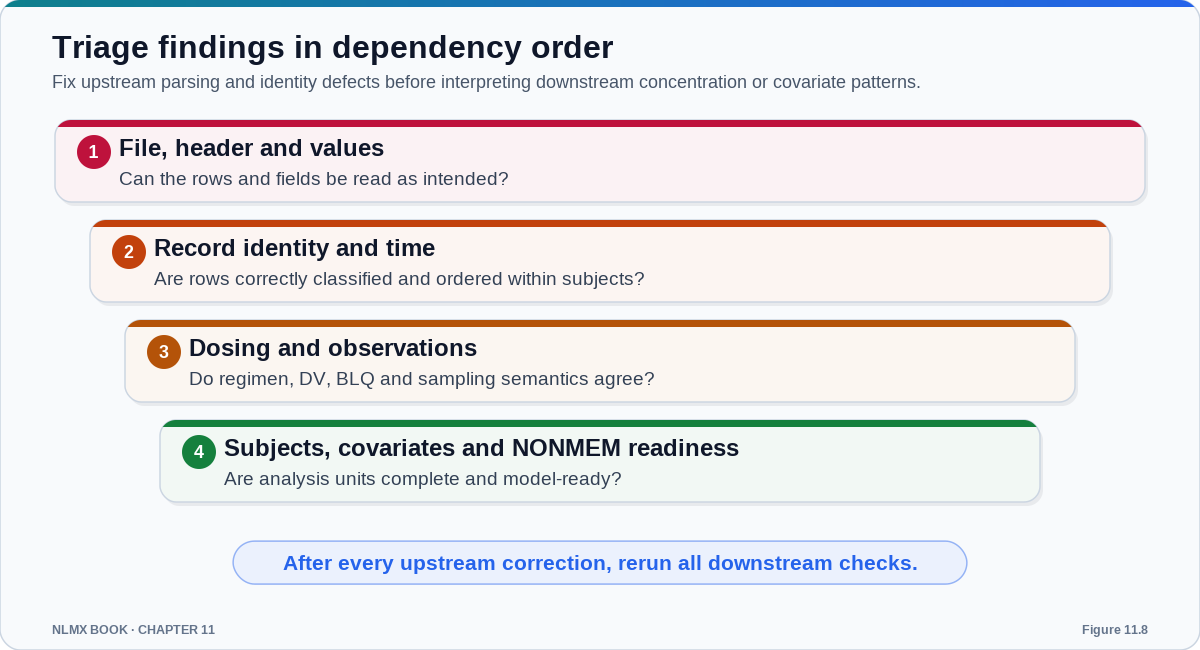
Figure 11.12. Parsing and identity defects come first; scientific-pattern checks depend on them.
The remediation loop
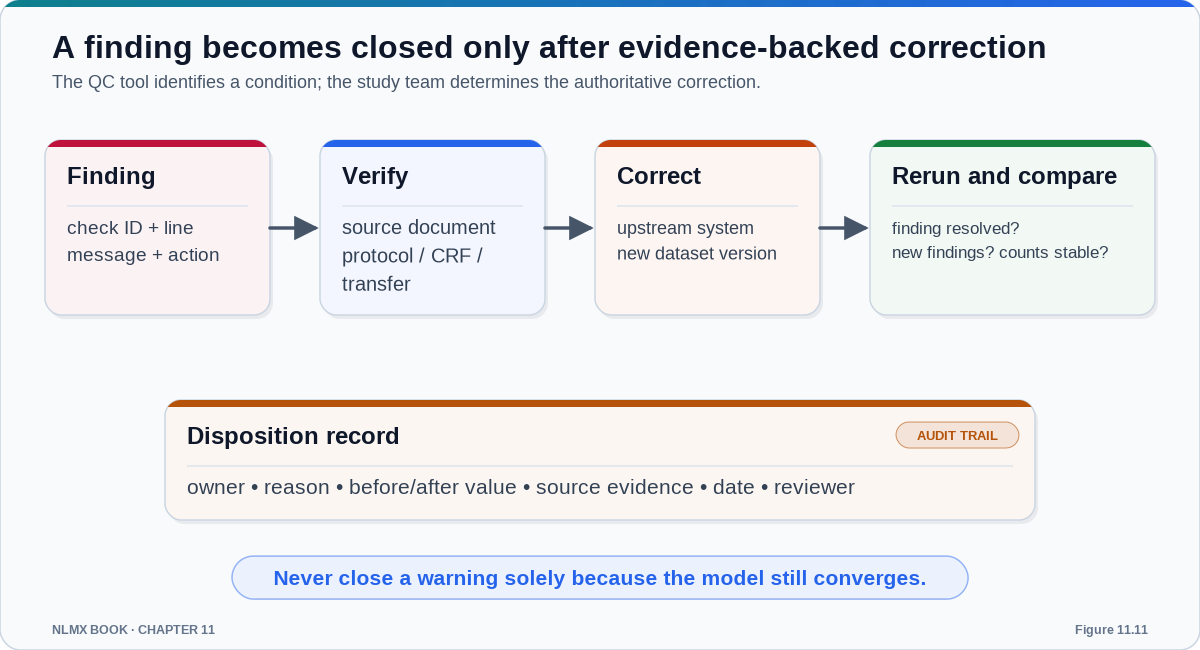
Figure 11.13. A finding closes only after source verification, controlled correction, rerun and documented disposition.
For each FAIL/WARN, record owner, check ID, affected line/ID, investigation, authoritative source, decision, before/after value, dataset version and reviewer. “Model converged anyway” is not a disposition.
After correction, compare more than the targeted check: subject/record/observation counts, new/removed check IDs, dose and covariate summaries, and checksums. Fixing an ID can merge blocks and expose new duplicates; fixing EVID can change BLQ and sampling denominators.
When not to change data
If the value is confirmed and unusual, retain it. Adjust the expectation only when the study context warrants it, and document that decision before rerun. A warning can remain with an approved disposition; whether it blocks release depends on governance and fail_on policy.
Comparing before and after
Create a compact reconciliation: input hashes, row/subject counts, changed cells with reasons, old/new verdict counts, resolved/new check IDs, and output bundle hashes. Unexpected count changes stop the review. A correction to one row may legitimately change several findings, but each change should be explainable. Independent review is especially important when the same analyst derives the correction and runs QC.
Common mistakes
- Fixing low-priority outliers before parsing failures.
- Changing data to achieve a green dashboard.
- Rerunning only the previously failed check.
- Closing findings without a source reference.
Checklist
- Triage by dependency and severity.
- Verify against authoritative evidence.
- Version source, settings and output bundle.
- Run the complete catalogue and compare globally.
Further reading
See QC limits, pipeline gates and publication/regulatory QC.