36A.17 PDF output and archival review
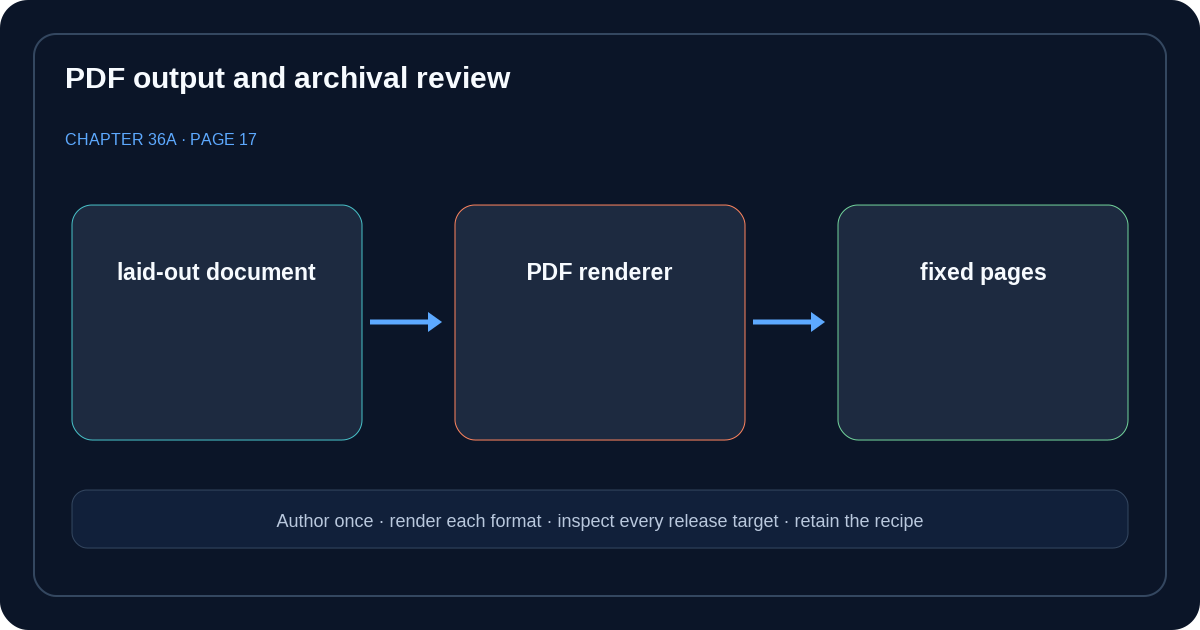
nlmx report publishes one Markdown source into retained Markdown, Word and PDF by default, with optional HTML. The command solves document generation; it does not validate the scientific analysis or approve its interpretation. Treat the source Markdown and .report file as the controlled recipe, and treat every released format as a separate review target.
Fixed-page review
PDF is the best target for stable pagination and archival visual inspection. nlmx writes embedded fonts, selectable/searchable text, clickable links, bookmarks, page-numbered TOC, tables, equations, images and optional page footers. It does not make the file PDF/A or apply digital signatures.
Render every page to images and inspect at normal reading scale and 100% zoom. Check title metadata, TOC destinations/numbers, headings, tables, equation glyphs, images, code lines, quotes, footnotes, links, margins and footer. Use text extraction as an additional check for searchability, not as layout proof.
The executed evidence PDF has two Letter pages, six outline items and correct title/author metadata. Both page images were inspected. The equation, results table, SVG figure, checklist, code block, footnote and Page n of N footer are visible without clipping or overlap.
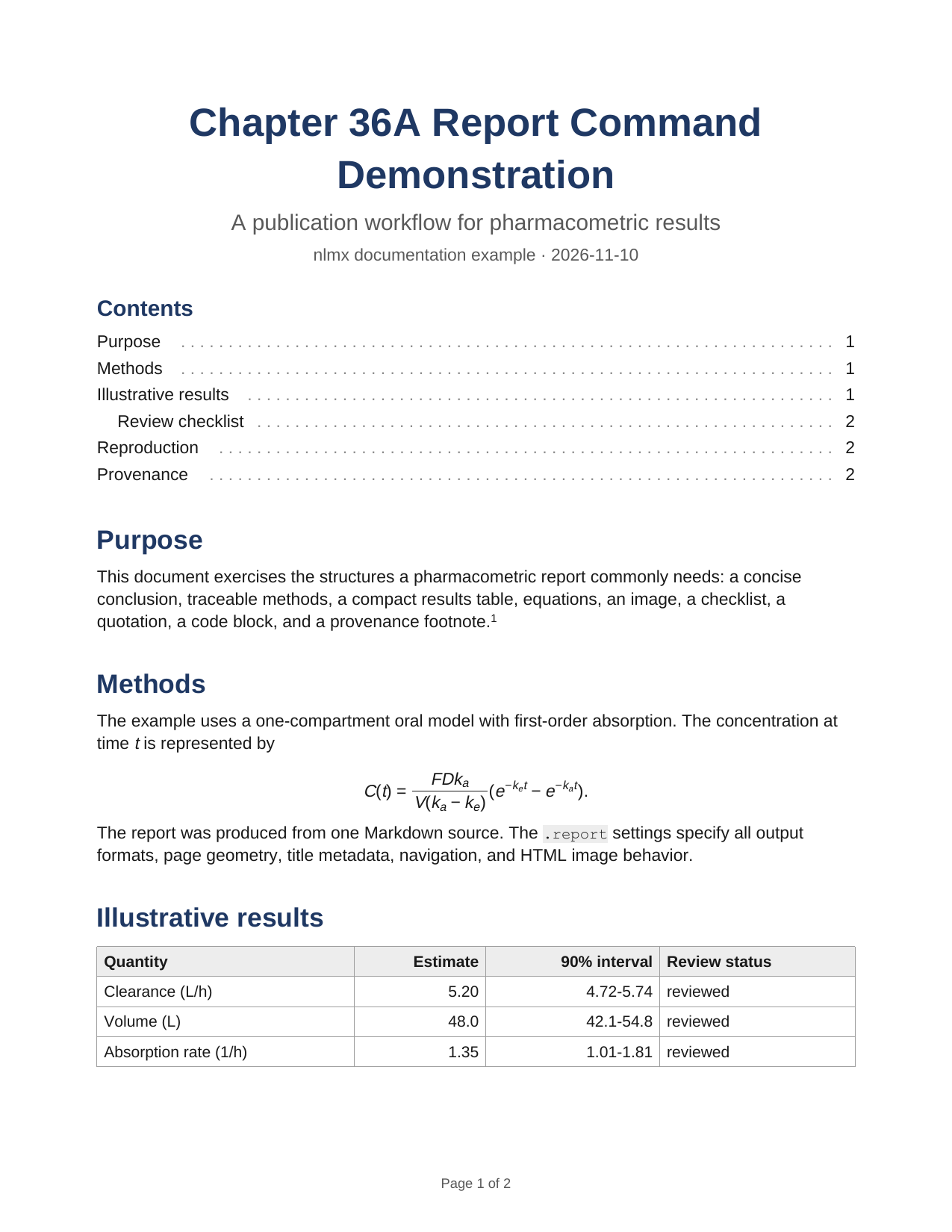
Do not approve PDF merely because its file opens. Record visual reviewer/date, source version and checksum. If the PDF is regenerated after a wording change, repeat the page review.
PDF acceptance record
Record metadata, page size/orientation/count, outline count, encryption/signature/PDF standard when required, text searchability and visual result. Test link/TOC destinations in an approved viewer. Compare a source claim, table value and equation against the rendered page. Inspect embedded figures at zoom. A clean raster preview plus searchable text is stronger than either check alone. If a renderer emits a font diagnostic, locate the affected glyphs/pages and decide from visual/text evidence; do not ignore the message or automatically reject an otherwise verified file.
Practical review questions
- Does the released content answer the stated question without exceeding the evidence?
- Can every number, table, figure and decision be traced to a retained native file and run?
- Were all generated targets—not merely the source—inspected after the latest change?
- Are warnings, failed runs, limitations and unverified steps visible rather than silently omitted?
- Could another qualified analyst rebuild the same document from the retained recipe?
Navigation
See the previous page, next page, and complete report reference.