34.13 Session-folder structure and evidence ownership
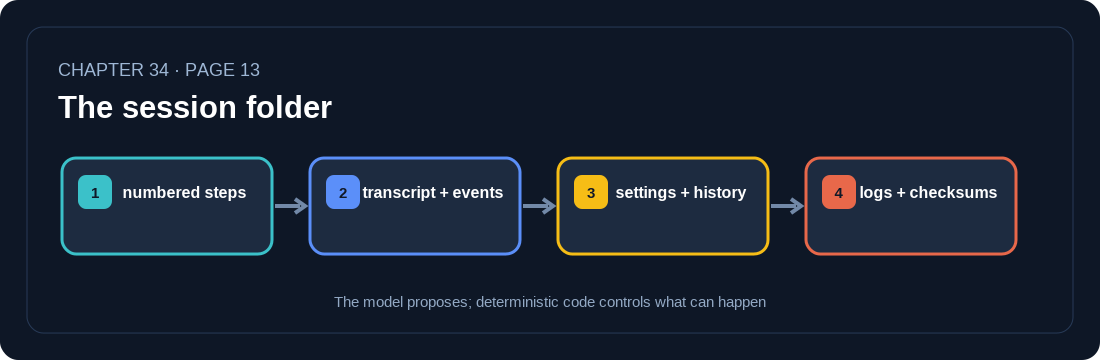
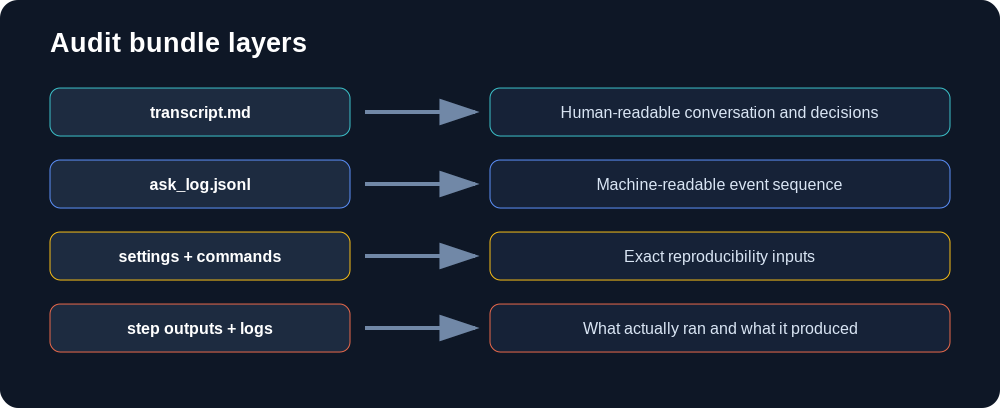
A session defaults to nlmx_ask/<date-time>/ under the start folder or uses a new/empty -o directory. Numbered subfolders contain each executed command and ask_console.txt. Root files preserve conversation, events, settings, instructions, commands, templates, and the ask log.
How the mechanism works
The session is an evidence container owned by the user/project, not hidden model state. Its numbered step layout provides execution order. Output confinement makes it easier to archive, compare, and delete under controlled retention without searching the broader filesystem.
Evidence from nlmx 4.16.1
The allowed run contains the root .ask, system prompt, transcript, JSONL event log, commands, template, generated .qcd, numbered QC output, copied .qcd, command transcript, 20 QC artifacts, and checksums. Plan-only and refused sessions contain no numbered executed step.
Executed evidence: Executed allowed-session transcript.
What the mechanism protects—and what it does not
The mechanism controls a defined part of the workflow. It does not make the model’s prose correct, select the right scientific question, validate external data, or transfer accountability away from the user. Treat policy safety, computational success, statistical adequacy, and scientific validity as separate conclusions.
Review practice
Check folder completeness before archival. A missing commands file, settings copy, event log, or checksum should be treated as a provenance gap. Apply project naming, access, retention, and electronic-record controls outside nlmx as required.
For a novice, read the human transcript first, then the JSONL event log, exact settings/commands, and native command outputs. “The session completed” describes the outer process only; individual proposals may have been planned, declined, refused, failed, corrected, or executed.
Evidence to retain
- nlmx version/build, backend identity,
.asksettings, policy, limits, and system prompt; - request, raw replies, help/manual/file context events, confirmations, refusals, and corrections;
- every settings version and exact executed command, with child exit status and full output;
- reviewer interpretation, unresolved warnings, scientific limitations, and final disposition.
Navigation
See the previous page, next page, and guardrail, policy, and audit index.