24.34 Checkpointing, analysis identity, and resume
After each configured batch—25 units by default—the engine writes checkpoint.json containing aggregation state, original command, engine version, feature registry identity, and analysis hash. nlmx resume --run-dir DIR rereads inputs, verifies compatibility, and continues from the next unmerged unit.
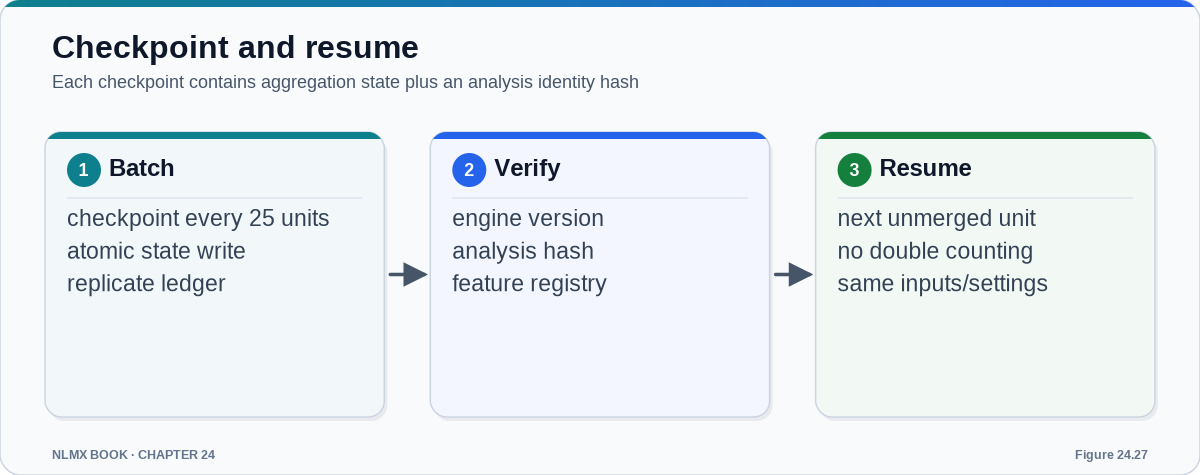
The hash prevents changed scope, learners, inputs, or settings from being silently merged. Completed units are not double-counted. --no-checkpoint reduces writes but removes recovery for long runs. Checkpoint files can contain derived analysis state and should be protected with the run bundle.
Resume is not a way to append selectively chosen extra replicates after inspecting results unless the extension rule was planned and identity-compatible.
Common mistakes
- Editing configuration before resume.
- Copying checkpoints between runs.
- Resuming with a different executable version.
- Deleting the replicate ledger.
- Disabling checkpoints for a long expensive schedule without recovery plan.
Checklist
- Preserve inputs, command, version, and checkpoint.
- Verify analysis hash and feature registry.
- Resume only compatible interrupted schedules.
- Confirm merged/completed unit counts.
- Archive final checkpoint with results.
Further reading
See Chapter 25 for end-to-end resume workflows and runtime/failures.