34.15 Result grounding and honest reporting
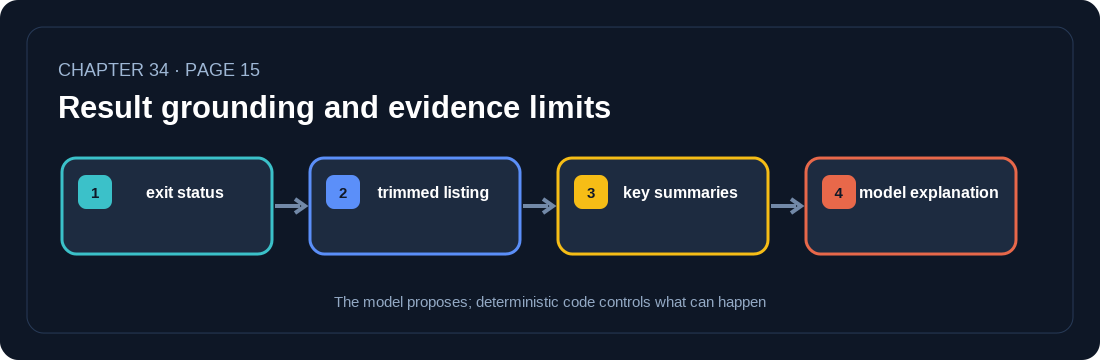
After execution, Maxson receives exit status, a trimmed listing, files written, and command-specific key facts. Examples include screen recommendation/reason/path and fit OFV, convergence, estimates, RSE, and boundary flags. The underlying full outputs remain in the step directory.
How the mechanism works
Built-in instructions require results to come from command output and decisions to remain with nlmx’s own algorithms. Maxson may explain, summarize, ask for a choice, or propose a next command; it should not replace screen/cov decisions or manufacture an unprinted estimate.
Evidence from nlmx 4.16.1
The approved mock deliberately said only that the checked command completed and directed review to evidence. The actual command verdict was NOT READY with one failure. A compliant final narrative must preserve that unfavorable result rather than convert execution success into data readiness.
Executed evidence: txtNative QC result read by the session.
What the mechanism protects—and what it does not
The mechanism controls a defined part of the workflow. It does not make the model’s prose correct, select the right scientific question, validate external data, or transfer accountability away from the user. Treat policy safety, computational success, statistical adequacy, and scientific validity as separate conclusions.
Review practice
Compare every material sentence to a cited table, summary, log, or explicit user assumption. Trimming can omit detail; small models can misread signs or warnings. The human reviewer must open the native artifact for consequential claims.
For a novice, read the human transcript first, then the JSONL event log, exact settings/commands, and native command outputs. “The session completed” describes the outer process only; individual proposals may have been planned, declined, refused, failed, corrected, or executed.
Evidence to retain
- nlmx version/build, backend identity,
.asksettings, policy, limits, and system prompt; - request, raw replies, help/manual/file context events, confirmations, refusals, and corrections;
- every settings version and exact executed command, with child exit status and full output;
- reviewer interpretation, unresolved warnings, scientific limitations, and final disposition.
Navigation
See the previous page, next page, and guardrail, policy, and audit index.