35.16 A regulated-site baseline configuration
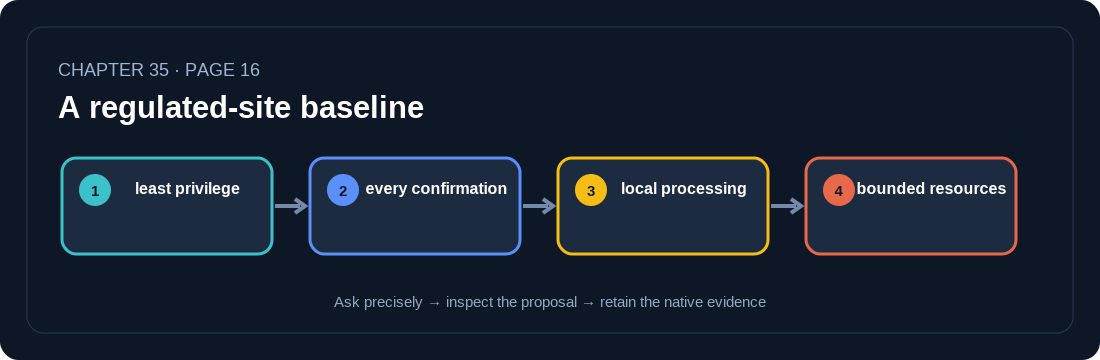
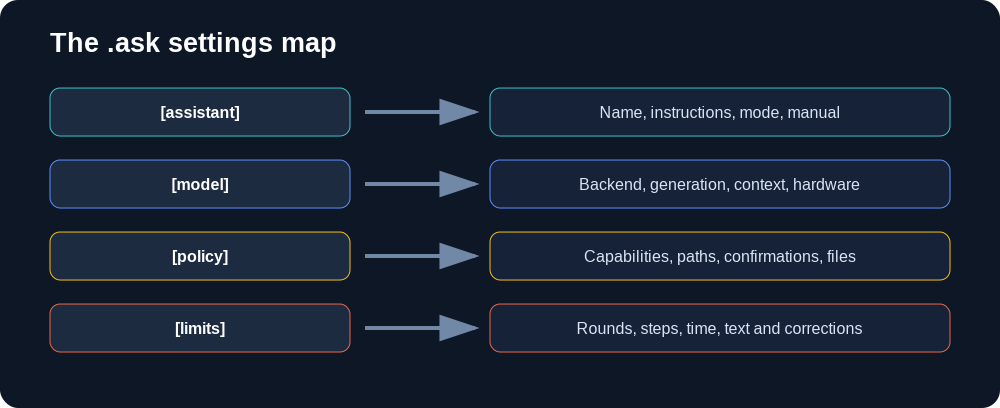
A conservative baseline uses a qualified local backend, explicit model identity, low temperature, grammar/JSON mode where supported, narrow command list, no remote server, every-command confirmation, allow_yes=false, mandatory settings files, explicit read roots and tighter numeric/time/step limits.
How to use it
The included hardened.ask demonstrates this pattern and additionally forbids --ci and --no-plots, caps threads, reduces corrections, and removes simulation/reporting commands. It is an example, not a universal compliant configuration.
Practical interpretation
Validation should cover installation qualification, policy unit tests, end-to-end mock sessions, real-model prompt tests, role/access controls, data classification, audit retention, backup, change control and periodic review. Electronic signatures and record controls lie outside nlmx.
Executed/reference evidence: Example hardened settings.
Adapting the baseline safely
Copy the example only as a starting point. Replace read roots with approved project locations, choose a qualified backend and pinned model, remove commands the role does not need, and set caps from protocol and infrastructure limits. Keep every-command confirmation while the workflow is new. If unattended execution is later justified, create a separate narrowly scoped profile rather than weakening the interactive baseline for everyone.
A regulated deployment also needs controls outside .ask: operating-system access, approved installation media, hashes, backup, retention, change tickets, incident handling, clock synchronization, reviewer roles, and validated downstream viewers. The session checksum proves later byte changes can be detected; it does not provide identity, electronic signature, or immutable storage by itself. Document which controls nlmx supplies and which the surrounding quality system supplies. Re-run the qualification suite after model, binary, prompt/instructions, server, policy, or material infrastructure changes.
A safe novice workflow
- Start with the narrowest backend, policy, files and command set that can answer the request.
- Name exact inputs and decisions; use guide or plan-only before granting execution.
- Inspect the normalized command and complete settings file, not only Maxson’s explanation.
- Read request end state, native command result, warnings, outputs and checksums.
- Preserve the session and record the qualified person’s interpretation and disposition.
Review and pitfalls
Separate operator convenience from site policy: users should not casually broaden allowlists or remote access. Compare resolved ask_settings.ask with the approved baseline in every consequential session.
- A session exit code of zero does not prove that every proposal ran or succeeded.
- Model fluency, structured JSON, and policy approval do not establish scientific validity.
- Settings and commands are reproducibility inputs; they still require versioned software and frozen data.
What to retain
Retain .ask, backend/model identity, system prompt, request, raw/normalized replies, transcript, JSONL events, settings versions, commands, child logs/outputs, checksums, exceptions, and reviewer conclusions.
Navigation
See the previous page, next page, and complete ask command and settings index.